
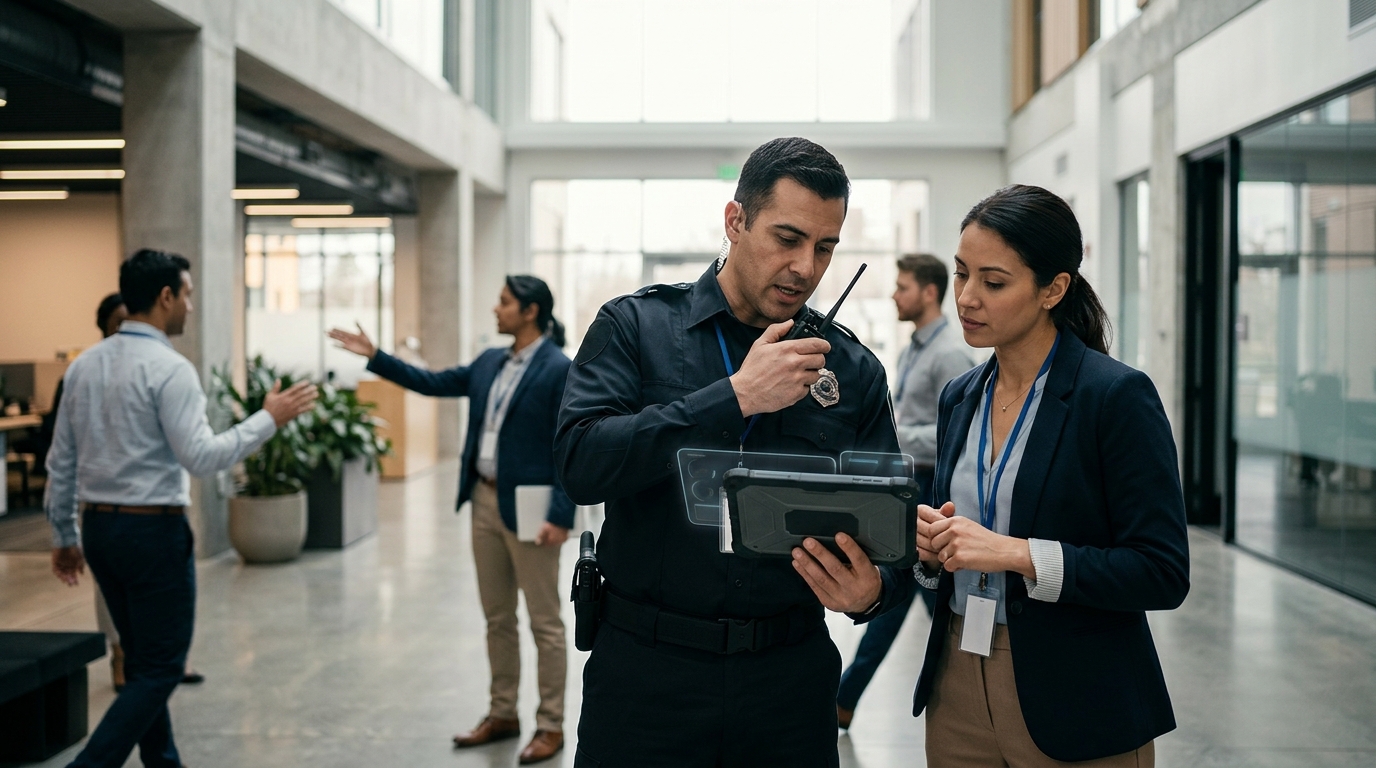
Medical Emergency Interactive Notification Systems for Industrial & Commercial Facilities
BluePoint Alert Solutions provides a medical emergency interactive notification system that connects all internal parties on one channel. This platform unifies on-site staff, security, and first responders through a single Command & Control interface. It eliminates fragmented communication during critical health incidents. This guide covers how industrial and commercial facilities can implement unified medical alerting to reduce response times and improve survival outcomes.
Industrial Facility Alerts
Industrial environments present unique challenges for medical emergency response. High ceilings, loud equipment, and dispersed teams create barriers to traditional communication methods. A medical emergency interactive notification system is a specialized platform that bridges the gap between on-site personnel and emergency responders in these complex settings. In manufacturing plants and warehouses, every minute lost during a cardiac arrest or severe injury can significantly reduce survival rates.
High-Risk Zones in Industrial Settings
Industrial facilities must identify areas with a higher risk of medical emergencies. These zones typically include lunch areas, manufacturing production floors, gyms, and nurse offices. Placing alert devices in these specific locations ensures that the right people are notified immediately. The system provides the precise location of the incident, allowing for quicker response times while ensuring all necessary personnel are informed.
Overcoming Environmental Barriers
Traditional phone calls or radio checks often fail in high-noise industrial environments. A unified notification channel overcomes these barriers by using automated text, email, and voice communications. This approach ensures that critical information reaches designated response teams instantly, regardless of ambient noise levels. The system is designed to function as a true life-safety solution, replicating the technical requirements that make fire alarms the most reliable systems in buildings.
Commercial Space Requirements
Commercial spaces, including offices and public facilities, face distinct safety challenges. According to the FBI, nearly 50% of all armed intruder events occur in commercial spaces. While this statistic highlights security threats, commercial buildings also require robust medical emergency protocols. A commercial medical alert system is a network of devices and software that coordinates medical response without triggering unnecessary law enforcement notifications. This distinction is crucial for maintaining operational continuity during health-related incidents.
Separating Medical and Security Alerts
One of the primary advantages of a dedicated medical alert system is the ability to separate medical emergencies from security threats. When a medical device is activated, notifications are sent only to predetermined medical responders, not law enforcement. This prevents the confusion and panic that can arise when police are dispatched for a non-violent medical event. Operations can continue unhindered in other parts of the building, as strobes and audio messaging associated with security alerts are not activated.
Protecting Employees and Visitors
Business owners have a responsibility to protect both employees and visitors. A unified notification system allows the organization to stand out as one with a superior level of safety. By integrating medical alerts into the broader emergency management strategy, commercial facilities can ensure that their people are protected and empowered. The system supports informed decision-making by providing real-time data to facility leaders and security teams. according to 10 6 7
The Command & Control Channel
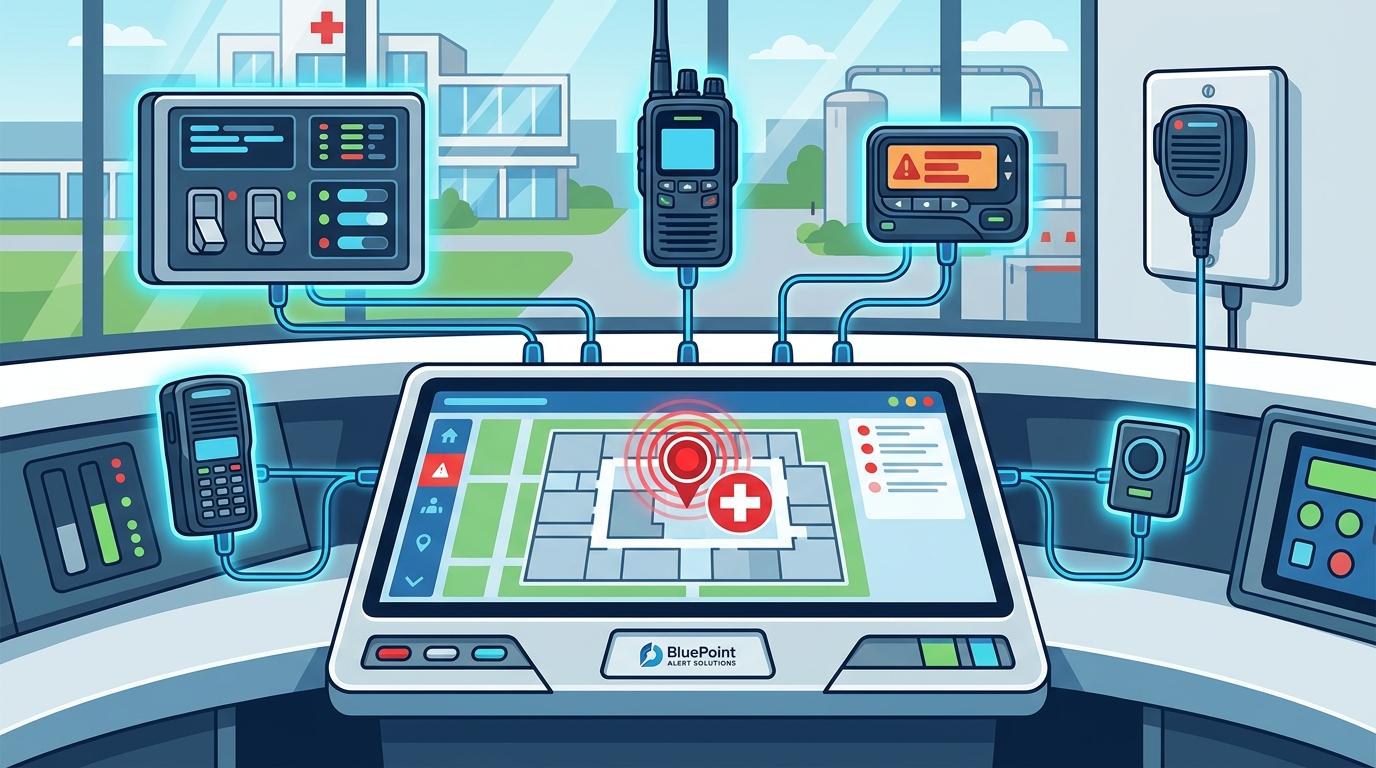
The core of any effective medical emergency interactive notification system is the communication platform. BluePoint Alert Solutions utilizes a Command & Control (C2) platform that transforms emergency communication into real-time coordination. This platform serves as the single channel that connects all internal parties, from building occupants to first responders. It provides integrated alerts, live mapping, and instant data sharing, empowering responders to make faster, smarter decisions.
Two-Way Communication Portal
The C2 platform includes a two-way communication portal that allows building occupants to provide real-time situational awareness. Occupants can respond to alerts via simple text or email, providing updates on their status or location. This interactive capability gives the Command Group quick insights into the information being provided. It enables the Command Group to provide faster, more informed instructions to building occupants, creating a dynamic feedback loop during the emergency.
Live Mapping and Floor Plans
Situational awareness is critical during a medical emergency. The C2 platform provides live location mapping that gives every responder a common operating picture of the incident. This includes detailed floor plans with pertinent information for informed decisions. First responders can see where people are, where they are moving to, and where they are moving from. This visual intelligence is crucial for an effective response by both building occupants and inbound first responders.
Automated Notifications
When a device is activated, the C2 platform simultaneously orchestrates on-site communication and delivers real-time situational awareness. Automated text, email, and voice communications reach the designated response team instantly. There is no need for a phone app or software login, ensuring that notifications are delivered without delay. This automated process eliminates the human-centric tasks that often take too much time, especially when people are in a state of panic.
Device Placement Strategies
Effective medical emergency response depends on strategic device placement. A medical alarm pull station is a manual activation device designed to be familiar, simple, and intuitive to use. These devices are modeled after standard fire alarm pull stations, ensuring that users can activate them without extensive training. The placement of these devices is critical to minimizing response times and maximizing the effectiveness of the notification system.
Strategic Locations for Medical Alerts
Medical pull stations should be placed in areas with a higher risk of medical emergencies. These locations include eating areas, corporate facilities, manufacturing production areas, gyms, and nurse offices. Strategically located pull stations provide simple alert coverage throughout the facility. The precise location of each device is mapped within the C2 platform, ensuring that responders know exactly where the incident has occurred.
Wearable Mobile Devices
In addition to fixed pull stations, wearable mobile devices can be worn by building staff, security, or visitors. These devices act as a portable panic button, allowing individuals to activate the system quickly and securely if they encounter a medical emergency. Wearable devices are particularly useful in large facilities where fixed stations may not be within immediate reach. They provide flexibility and ensure that anyone in the building can initiate a response.
Integration with Existing Systems
Medical alert devices can be integrated into the broader alert ecosystem or used as a stand-alone solution. They are designed to complement police alert systems, providing a comprehensive approach to emergency management. The devices include integral battery backup and supervised communication pathways, ensuring uninterrupted service during power outages or network failures. This integration ensures that the medical alert system is as reliable as the fire alarm system in the building.
Reliability and Redundancy
Reliability is the cornerstone of any life-safety system. BluePoint Alert Solutions systems are engineered with life-safety at their core, incorporating attributes required of other life-safety systems. These attributes include all components being supervised, redundant communications, battery backup, and secure protection from unauthorized disabling. The system is monitored by an Underwriters Laboratories (UL)-listed and Factory Mutual (FM)-approved Central Station, ensuring the highest standards of reliability and security.
Redundant Communication Pathways
BluePoint systems use redundant communication pathways, including cellular failover, to ensure alerts are transmitted even if the primary network fails. The central station operates on multiple sources of power, with secondary sources capable of running for extended periods without refueling. This level of redundancy ensures that the system remains operational during power outages or network disruptions. The communication systems are rated at 99.999% availability, with less than 5 minutes of downtime per year.
Security and Compliance
The Command & Control platform uses enterprise-level encryption, multi-factor authentication, and secure server hosting to protect sensitive data. Only authorized personnel can access system controls, ensuring the integrity of the emergency response process. The system is compliant with FEMA’s recommendation for Incident Command Structure and Multi-Hazard Communications. This compliance ensures that the system meets the highest standards for emergency management and coordination.
Implementation and Testing
Implementing a medical emergency interactive notification system requires careful planning and execution. Installation timelines vary by building size and complexity, but typical installations for standard setups can be completed within 1 to 3 days. BluePoint provides detailed installation planning to minimize disruption to daily operations. The system is designed to be easy to install and manage, allowing EHS and occupation safety teams to deploy it quickly.
Regular Testing Protocols
Regular testing is recommended at least quarterly to ensure device functionality and system reliability. Testing ensures that all components, including pull stations, strobes, and communication pathways, are working correctly. It also verifies that notifications are being delivered to the correct contacts. Regular testing helps identify and resolve any issues before they become critical during an actual emergency.
Training and Familiarization
While the system is designed to be simple and intuitive, training is still important for building occupants and response teams. Training ensures that users know when and what to do after activation. It also helps build instinct under stress, improving decision-making during high-pressure situations. By familiarizing staff with the system, organizations can ensure a faster and more coordinated response when a medical emergency occurs.
Key Takeaways
- A medical emergency interactive notification system connects all internal parties on one channel, eliminating fragmented communication.
- Industrial facilities benefit from unified alerting in high-risk zones like production floors and gyms.
- Commercial spaces require systems that separate medical alerts from security alerts to maintain operational continuity.
- The Command & Control platform provides two-way communication, live mapping, and automated notifications.
- Strategic device placement, including pull stations and wearable devices, is critical for minimizing response times.
- Reliability is ensured through redundant communication pathways, battery backup, and UL/FM-approved monitoring.
- Regular testing and training are essential for maintaining system functionality and staff familiarity.
- BluePoint Alert Solutions offers a true life-safety approach, compliant with FEMA recommendations for emergency management.
Frequently Asked Questions
How does the BluePoint Alert system notify first responders?
When a device is activated, the central station receives the alert and immediately contacts the predetermined law enforcement agency or medical responders. Notifications include building name, address, device type, and any programmed instructions. Alerts can also be sent to responders and administrators via SMS, email, and phone, even before dispatch has contacted responders.
What types of emergencies is BluePoint designed to handle?
BluePoint systems are designed for active threat incidents, medical emergencies, workplace violence, hazmat and weather emergencies, and other urgent situations requiring immediate law enforcement or emergency responder notification. Our systems provide interactive communication between parties and increased situational awareness with tools like video streams and live mapping tools.
What is the difference between BluePoint Police Alert and Medical Alert devices?
Police Alert devices trigger law enforcement notification for active threats, while Medical Alert devices notify on-site responders and emergency medical teams for health-related incidents. Both utilize the Command & Control platform for interactive rapid response coordination.
Can BluePoint systems provide alerts during off-hours or holidays?
Yes. Alerts are always transmitted to the designated first responders, on-site personnel and administrators regardless of time or day, ensuring 24/7 coverage.
Can BluePoint systems work if the building network goes down?
Yes. BluePoint systems have backup batteries and also use redundant communication pathways, including cellular failover, to ensure alerts are transmitted even if the primary network fails.
How secure is the BluePoint Command & Control platform?
Command & Control uses enterprise-level encryption, multi-factor authentication, and secure server hosting to protect sensitive data and ensure only authorized personnel can access system controls.
Are BluePoint devices ADA compliant and accessible?
Yes. Devices are designed with accessibility in mind, including proper mounting heights, tactile feedback, and visual indicators to meet ADA requirements where applicable.
How quickly can a BluePoint system be installed in a school or office?
Installation timelines vary by building size and complexity. Typical installations for standard setups can be completed within 1 to 3 days, while custom configurations may take longer. BluePoint provides detailed installation planning to minimize disruption.
Conclusion
Choosing the right medical emergency interactive notification system is critical for the safety of your employees and visitors. BluePoint Alert Solutions offers a comprehensive solution that connects all internal parties on one channel, ensuring fast and coordinated response. By leveraging the Command & Control platform, industrial and commercial facilities can reduce response times and improve survival outcomes. To learn more about how BluePoint can protect your facility, for a personalized consultation. according to Remote Interactive Evaluations