

Manufacturing plants can install self-contained, wireless emergency alert systems without a licensed contractor by using plug-and-play hardware that connects to a cloud-based monitoring platform. These systems bypass traditional hardwired infrastructure, allowing facility managers to deploy rapid response capabilities directly. This guide covers wireless architecture, installation requirements, self-service deployment models, and IP network integration for industrial environments.
Wireless Emergency Systems
Wireless emergency systems are communication networks that transmit alert signals without physical cabling between activation points and monitoring stations. In manufacturing environments, these systems rely on cellular or Wi-Fi connectivity to send data to a central cloud platform. This architecture eliminates the need for extensive low-voltage wiring, which is often costly and disruptive in large industrial facilities.
Cellular vs. Wi-Fi Connectivity
Cellular-based devices use dual SIM cards to ensure redundant communication pathways. If one carrier fails, the system automatically switches to the backup provider. This redundancy is critical for life-safety applications where signal loss can delay response times. Wi-Fi based systems leverage existing facility networks but may require additional access points to cover large warehouse floors or high-ceiling manufacturing spaces.
Signal Coverage in Industrial Spaces
Industrial structures often present signal challenges due to metal framing, concrete walls, and high ceilings. Facility managers must conduct a site survey to identify dead zones. Wireless systems with built-in signal strength indicators help technicians verify coverage before finalizing device placement. Ensuring consistent connectivity is essential for reliable alert transmission during critical incidents.
DIY Installation Requirements
DIY installation requirements define the technical and regulatory standards that facility staff must meet when deploying alert hardware without external contractors. While the physical mounting of devices is straightforward, the configuration and testing phases require specific technical knowledge. Understanding these requirements ensures the system functions correctly and complies with local safety codes.
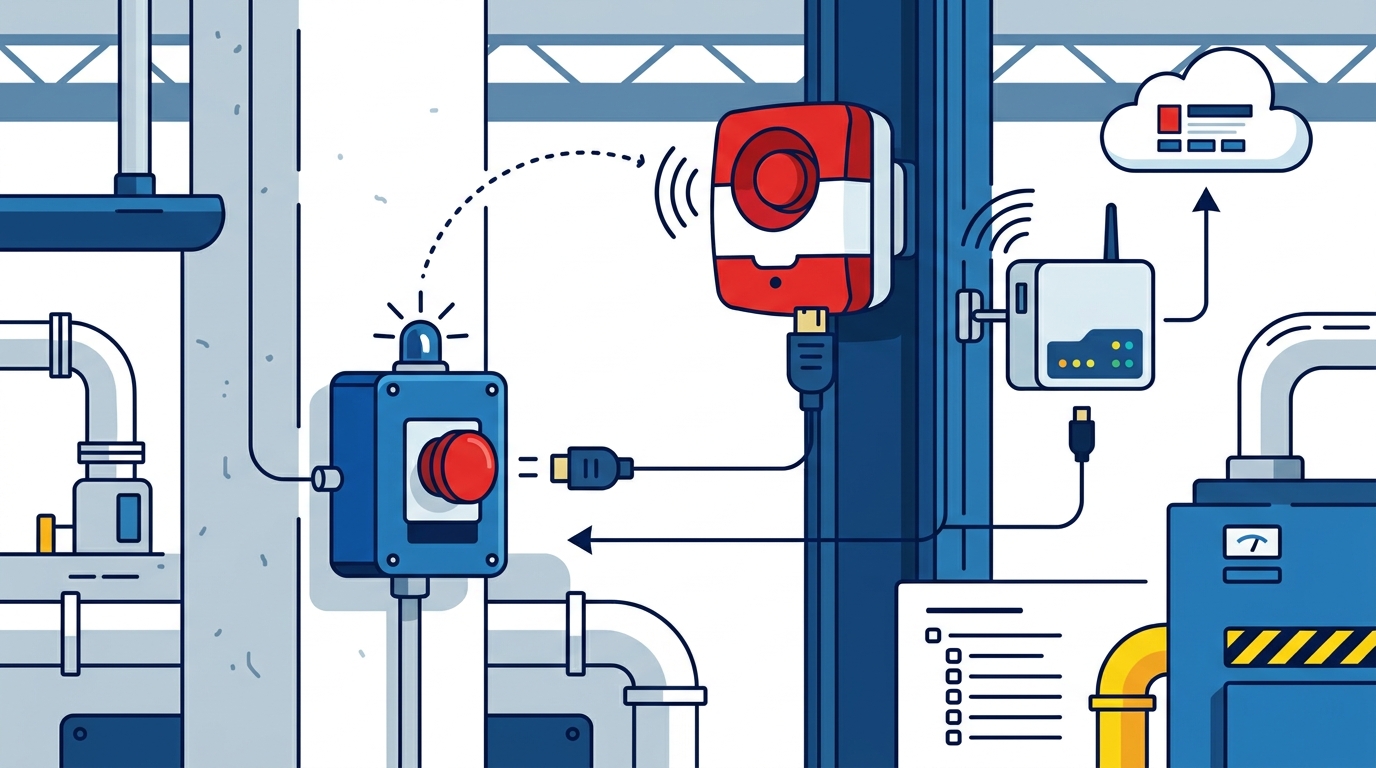
Hardware Mounting and Placement
Activation devices must be mounted at accessible heights, typically between 42 and 48 inches from the floor. This placement ensures that employees of varying heights can operate the device quickly during an emergency. Devices should be located in high-traffic areas, near exits, and in zones with higher risk of medical incidents or security threats. Proper labeling is also required to distinguish between police alert and medical alert functions.
Power and Battery Backup
Most self-installed units use standard duplex receptacles for primary power. However, life-safety standards require battery backup to maintain functionality during power outages. Technicians must verify that the internal battery is charged and that the unit correctly reports power status to the monitoring platform. Regular testing of the battery backup is necessary to ensure the device can operate for the required duration during a grid failure.
Regulatory Compliance and Testing
Facilities must ensure that their installation meets local fire and building codes. This includes verifying that the system is monitored by a UL-listed and FM-approved central station. Quarterly testing is recommended to confirm device functionality, communication pathways, and notification accuracy. Documentation of these tests is often required for insurance purposes and regulatory audits.
Self Installation Systems
Self installation systems are pre-configured emergency alert packages designed for deployment by in-house facility teams. These systems typically include activation hardware, monitoring subscriptions, and a cloud-based command platform. The goal is to reduce the barrier to entry for organizations that lack dedicated security integrators. By handling the installation internally, companies can deploy safety measures faster and at a lower cost.
Pre-Configured Hardware Packages
Modern self-installation kits arrive with devices pre-programmed for the specific facility. This includes the building address, device location identifiers, and contact lists for emergency responders. The pre-configuration reduces the technical burden on facility staff, who only need to mount the hardware and verify connectivity. Some systems offer compact response units that combine activation and notification features in a single panel.
Cloud-Based Command Platforms
The backend of a self-installation system is a cloud-based command and control platform. This platform manages notifications, tracks device status, and provides two-way communication during incidents. Facility leaders can access the platform via web browsers or mobile devices, allowing them to manage alerts from anywhere. The cloud architecture ensures that the system remains operational even if on-site servers fail.
Training and Documentation
Successful self-installation requires training for facility staff on system operation and maintenance. This includes how to activate devices, how to reset them after a test, and how to interpret status alerts. Comprehensive documentation should be provided to guide the installation process and outline ongoing maintenance schedules. Clear training ensures that employees can respond effectively during real emergencies.
IP Network Deployment
IP network deployment is the process of integrating emergency alert devices into a facility's existing internet infrastructure. This method allows devices to communicate with the monitoring platform using standard Ethernet or Wi-Fi connections. IP-based systems offer flexibility in placement and can leverage existing network hardware, reducing the need for dedicated communication lines.
Leveraging Existing Infrastructure
Manufacturing plants often have robust IP networks for operational technology and IT systems. Emergency alert devices can connect to these networks using standard Ethernet ports or Wi-Fi. This approach eliminates the need for separate cellular plans for each device, although cellular backup is still recommended for redundancy. Integrating with the existing network simplifies management and allows for centralized monitoring of all connected devices.
Network Security and Segmentation
Connecting life-safety devices to the corporate network requires careful security planning. These devices should be placed on a separate Virtual Local Area Network (VLAN) to isolate them from general IT traffic. This segmentation prevents potential cyber threats from compromising the alert system. Network administrators must configure firewalls to allow only necessary traffic between the alert devices and the monitoring platform.
Redundancy and Failover
IP network deployments must include failover mechanisms to ensure reliability. If the primary network connection fails, the system should automatically switch to a backup connection, such as cellular. This dual-path communication ensures that alerts are transmitted even during network outages. Regular testing of the failover process is essential to verify that the system can maintain connectivity under adverse conditions.
Key Takeaways
- Wireless systems eliminate the need for extensive cabling, making them ideal for large manufacturing facilities.
- DIY installation requires attention to mounting heights, power backup, and regulatory compliance.
- Self-installation systems provide pre-configured hardware and cloud-based platforms for in-house deployment.
- IP network deployment leverages existing infrastructure but requires security segmentation and failover planning.
- Cellular redundancy is critical for ensuring reliable communication during network outages.
- Regular testing and staff training are essential for maintaining system effectiveness.
- Cloud-based command platforms allow facility leaders to manage alerts and communicate with responders in real-time.
Frequently Asked Questions
Can a manufacturing plant install an emergency alert system without a licensed contractor?
Yes, many modern emergency alert systems are designed for self-installation by in-house facility teams. These systems use wireless connectivity and pre-configured hardware to simplify the deployment process. However, facility staff must still adhere to local safety codes and conduct regular testing to ensure compliance.
What is the difference between a police alert and a medical alert device?
Police alert devices are designed to notify law enforcement during active threats or security incidents. Medical alert devices notify on-site responders and emergency medical teams during health-related incidents. Both types of devices can be integrated into a single system, allowing facility staff to select the appropriate response based on the nature of the emergency.
How does a wireless emergency system communicate with the monitoring station?
Wireless systems use cellular or Wi-Fi connections to transmit alert data to a cloud-based monitoring platform. The platform then notifies designated responders via text, email, or phone. Cellular-based devices often use dual SIM cards to ensure redundant communication pathways, which is critical for life-safety applications.
What are the regulatory requirements for installing an emergency alert system?
Regulatory requirements vary by location but generally include compliance with local fire and building codes. The system must be monitored by a UL-listed and FM-approved central station. Facility managers should also ensure that devices are mounted at accessible heights and that regular testing is conducted to verify functionality.
How can a facility ensure that its IP network is secure when deploying alert devices?
Facilities should place alert devices on a separate VLAN to isolate them from general IT traffic. This segmentation prevents potential cyber threats from compromising the alert system. Network administrators must also configure firewalls to allow only necessary traffic between the devices and the monitoring platform.
What is the role of a cloud-based command platform in an emergency alert system?
A cloud-based command platform manages notifications, tracks device status, and provides two-way communication during incidents. Facility leaders can access the platform via web browsers or mobile devices, allowing them to manage alerts from anywhere. The cloud architecture ensures that the system remains operational even if on-site servers fail.