

Manufacturing plants can install self-contained, wireless emergency alert systems without a licensed contractor. BluePoint Alert Solutions offers the RapidAlert platform, a self-installed medical emergency alert system designed for EHS and safety teams. This guide covers wireless architecture, DIY installation requirements, self-installation benefits, and IP network deployment for industrial environments.
Wireless Emergency Systems
Wireless emergency systems are communication networks that transmit alert signals without physical cabling between activation devices and central monitoring stations. In manufacturing environments, wireless technology is critical because it allows for rapid deployment in large, open floor plans where running new conduit or low-voltage wiring is cost-prohibitive or disruptive to production lines.
BluePoint Alert Solutions utilizes a cellular dual SIM primary communication pathway for its RapidAlert units. This architecture ensures that alerts are transmitted directly to the Command & Control (C2) platform via cellular networks, bypassing the need for a dedicated local area network (LAN) connection for the alert device itself. The system is supervised for communication trouble, meaning if the cellular signal is lost, the system flags the issue to the monitoring station. This redundancy is a core component of life-safety design, ensuring that the alert mechanism remains functional even if the plant's internal IT infrastructure experiences a failure.
Cellular vs. Wired Connectivity
DIY Installation Requirements
DIY installation requirements for modern emergency alert systems have shifted significantly due to low-voltage design standards. A Rapid Emergency Response System (RERS) is a specialized notification device that alerts designated responders to an incident. For a manufacturing plant to install these systems without a contractor, the hardware must operate on standard building power without requiring licensed electrical work.
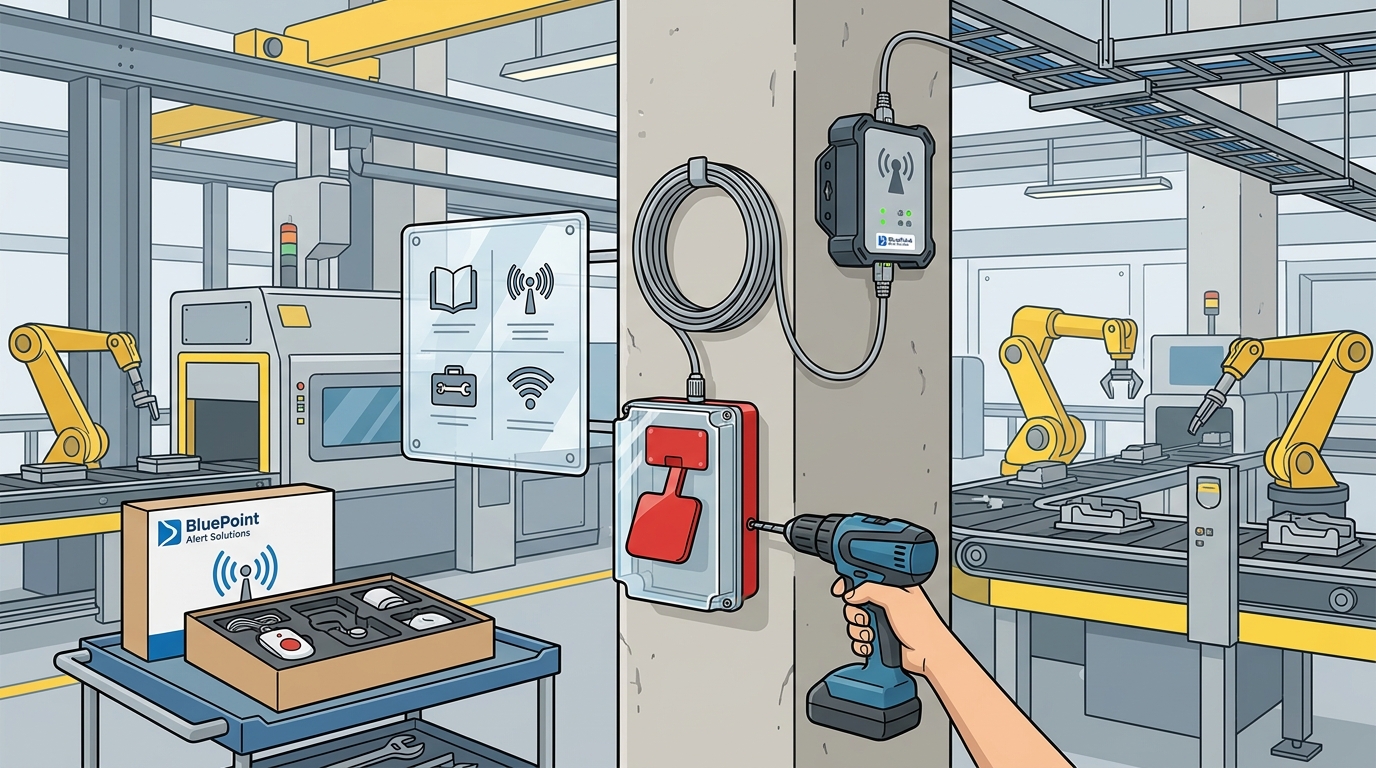
BluePoint Alert Solutions designs its RapidAlert units to be self-installed by EHS teams. The system operates on low voltage, meaning a licensed electrician is not required for the installation process. The unit includes a plug-in transformer for standard duplex receptacles. This design choice removes the most significant barrier to DIY installation: the need for professional electrical permits and inspections. The installation process typically involves mounting the device on a wall or pillar and plugging it into an available outlet. Most units can be installed in under 30 minutes using basic tools.
Placement and Visibility Standards
Effective DIY installation requires strategic placement. Devices should be installed in high-visibility, high-risk areas such as near AEDs, first aid stations, production floors, warehouse aisles, and entry/exit points. The goal is to ensure employees can quickly access the device during an emergency. The device features a green lens to clearly differentiate it from standard fire alarm pull stations, which are typically red. This visual distinction is crucial in industrial settings where multiple safety systems coexist.
Self Installation Systems
Self installation systems are emergency notification platforms engineered for non-technical users to deploy, configure, and manage without third-party integrators. The primary value proposition of a self-installation system is speed and autonomy. In a manufacturing context, where production schedules are rigid, the ability for an internal safety team to deploy new alert points without waiting for a contractor's schedule is a major operational advantage.
BluePoint Alert Solutions positions RapidAlert as a solution specifically for EHS and occupational safety teams. The platform is designed to be easy to install and easy to manage. The "self-installed" nature of the system extends beyond physical mounting to digital configuration. Users can manage contact lists, test devices, and monitor system health through the C2 portal. This autonomy allows safety managers to scale their emergency response coverage as the facility grows or as new risk assessments are completed, without incurring recurring service fees for installation labor.
Comparison of Installation Models
| Feature | Traditional Contractor-Installed System | BluePoint RapidAlert (Self-Installed) |
|---|---|---|
| Licensed Electrician Required | Yes | No |
| Installation Time | Days to Weeks | Under 30 Minutes |
| Wiring Complexity | High (Conduit/Cable) | Low (Plug-in Transformer) |
| IT Dependency | High (Network Config) | Low (Cellular Primary) |
| Scalability | Slow (New Contracts) | Fast (Add Units as Needed) |
IP Network Deployment
IP network deployment refers to the integration of emergency alert devices into a facility's existing Internet Protocol infrastructure. While wireless cellular is the primary mode for RapidAlert, understanding IP deployment is essential for organizations that prefer wired reliability or wish to integrate alert data with other IP-based security systems. The RapidAlert platform supports optional wired Ethernet connectivity, allowing the device to communicate over the plant's local network.
When deployed over an IP network, the device must be configured with the correct network credentials. This typically involves assigning a static IP address or configuring DHCP reservations. The device then communicates with the C2 platform over the internet. For manufacturing plants with robust IT security, this method allows for tighter control over data traffic. However, it requires coordination between the EHS team and the IT department to ensure that the device's IP address is whitelisted and that firewall rules permit outbound communication to the monitoring service. The system is supervised for AC loss and communication trouble, providing visibility into the health of the IP connection.
Integration with Command & Control
Regardless of whether the device uses cellular or IP connectivity, the data flows into the BluePoint Command & Control (C2) platform. The C2 platform provides real-time situational awareness through live maps and floor plans. When a RapidAlert unit is activated, the C2 platform simultaneously orchestrates on-site communication and delivers real-time data to responders. This integration ensures that the physical alert device is just one component of a broader digital command structure. The platform supports automated text, email, and voice communications, reaching the designated response team instantly without the need for a mobile app or login.
Key Takeaways
- BluePoint Alert Solutions offers the RapidAlert system, a self-installed medical emergency alert platform designed for manufacturing and industrial settings.
- RapidAlert units operate on low voltage with plug-in transformers, eliminating the need for a licensed electrician or contractor.
- The system uses cellular dual SIM as its primary communication pathway, reducing dependency on the plant's internal IT network.
- Installation is designed to be completed in under 30 minutes using basic tools, allowing EHS teams to deploy alerts rapidly.
- Devices feature a green lens to distinguish them from red fire alarm pull stations, aiding in quick identification during emergencies.
- The platform integrates with the Command & Control (C2) portal for real-time mapping, automated notifications, and incident management.
- Optional wired Ethernet connectivity is available for facilities that prefer IP network deployment over cellular.
- Self-installation models provide greater autonomy and scalability for safety teams compared to traditional contractor-dependent systems.
Frequently Asked Questions
Can a manufacturing plant install BluePoint RapidAlert without a contractor?
Yes. RapidAlert is designed for simple, do-it-yourself installation. Most units can be installed in under 30 minutes using basic tools, with no wiring or integrator required. The system operates on low voltage, so a licensed electrician is not needed.
Does RapidAlert require a mobile app to function?
No. The system sends automated text, email, and voice communications to designated responders. No phone app or software login is required for recipients to receive alerts.
What happens if the plant's internet connection goes down?
RapidAlert uses cellular dual SIM as its primary communication pathway. This ensures that alerts are transmitted even if the building's local network or internet service fails. The system is supervised for communication trouble to alert administrators of any connectivity issues.
How is RapidAlert different from a standard fire alarm pull station?
RapidAlert is a medical emergency alert system. It is designed to notify medical responders and on-site teams, not law enforcement. It features a green lens to visually distinguish it from red fire alarm pull stations. It does not trigger building-wide strobe lights or audio messaging that would disrupt operations.
Can RapidAlert be configured to dispatch an ambulance?
Yes. Ambulance dispatch is optional and can be selected during the ordering process. There is no additional cost for dispatch services. The system can be configured to make a dispatch request to the local public safety answering point (PSAP).
Where should RapidAlert devices be placed in a manufacturing plant?
Devices should be installed in high-visibility, high-risk areas such as near AEDs, first aid stations, production floors, warehouse aisles, break rooms, and entry/exit points. Placement should ensure employees can quickly access the device during an emergency.
Conclusion
For manufacturing plants seeking to enhance workplace safety without the logistical burden of hiring a security contractor, self-installed wireless emergency systems offer a practical and effective solution. BluePoint Alert Solutions provides the RapidAlert platform, which combines low-voltage, plug-in hardware with cellular connectivity and a robust Command & Control backend. This approach empowers EHS teams to take direct control of their emergency response infrastructure, ensuring that critical medical alerts can be deployed quickly and managed autonomously. To explore how RapidAlert can fit your facility's safety strategy, to discuss your specific installation needs.