

Self-Installed Medical Alert Systems for Manufacturing Facilities
Yes, BluePoint Alert Solutions offers the RapidAlert platform, a self-installed medical emergency response system designed specifically for manufacturing and industrial environments. This guide covers the technical requirements for self-installation, the operational benefits for EHS teams, and how to integrate these devices into your existing safety infrastructure to reduce response times during critical medical events.
Self-Installation Requirements
Power and Connectivity
The RapidAlert unit utilizes a plug-in transformer for standard duplex receptacles. This design eliminates the need for hardwired electrical connections, which are often costly and time-consuming in industrial settings. The device includes an integral battery backup that is supervised for low battery status, ensuring uninterrupted service during power outages. Communication is handled via a cellular dual SIM primary pathway, with an optional wired ethernet connection available for facilities with robust internal networks.
Physical Mounting and Accessibility
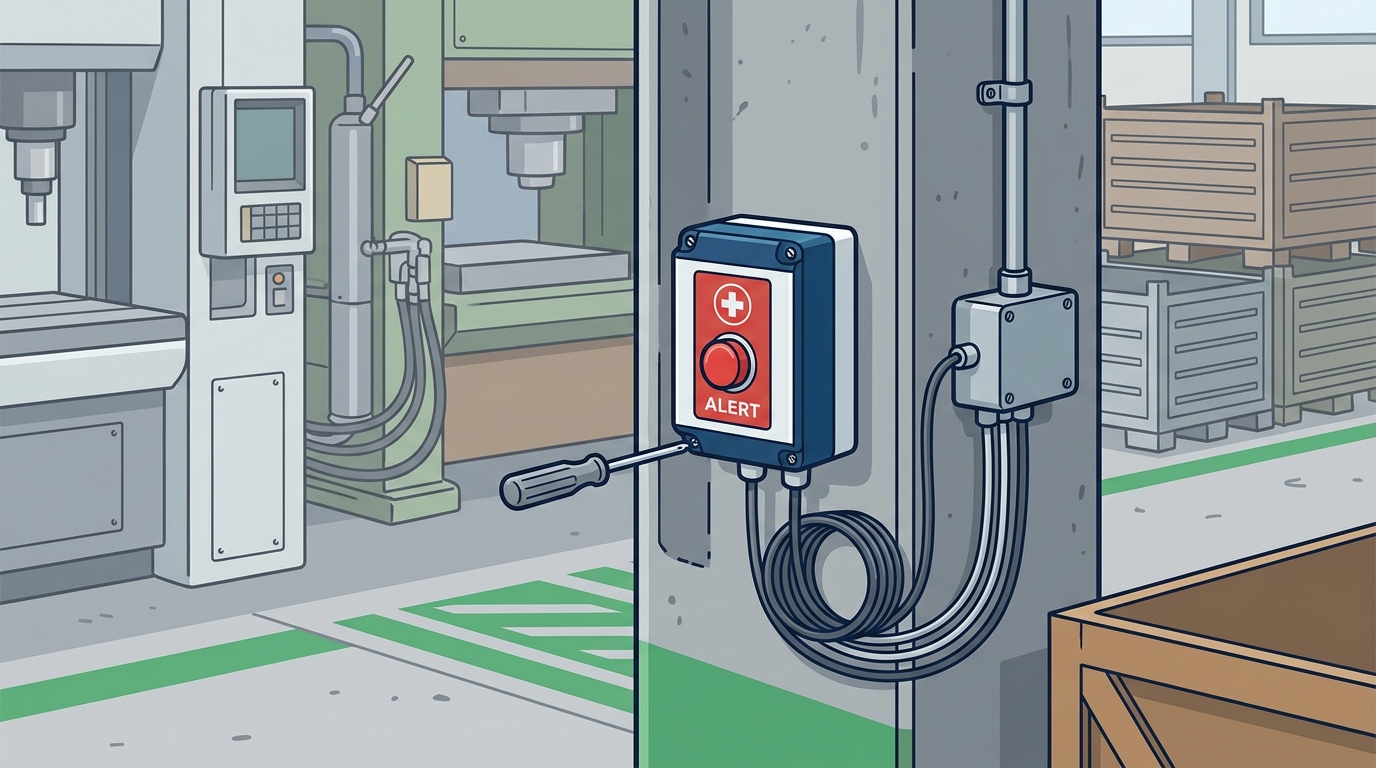
Devices are designed with accessibility in mind, meeting ADA requirements where applicable through proper mounting heights and tactile feedback. The activation mechanism is modeled after a standard fire alarm pull station, requiring a push-in and pull-down motion. This familiar interface ensures that any employee, regardless of training level, can activate the alert in a moment of panic. The device remains latched until reset with a key, preventing accidental re-activation or tampering.
Why Manufacturing Facilities Need Dedicated Medical Alerts
Manufacturing floors present unique hazards that standard security systems are not designed to address. A medical emergency in a factory is distinct from a security threat; it requires immediate medical intervention rather than law enforcement dispatch. Every minute lost during cardiac arrest can reduce survival rates by up to 10%, making rapid notification a life-saving imperative. Delayed responses also drive up costs, as a workplace fatality averages $1.46 million and a severe injury costs approximately $43,000 in direct and indirect expenses.
The Risk of Protocol Breakdown
Without standardized alerts, staff may freeze or act inconsistently during a medical crisis. In large facilities with high ceilings and loud equipment, verbal communication often fails. A dedicated medical alert system provides a clear, unambiguous signal that triggers a pre-defined response protocol. This clarity allows the right people to respond at the same time, reducing confusion and ensuring that first aid is administered within the critical first four minutes.
Strategic Placement
Medical pull stations should be placed in areas with a higher risk of medical emergencies. These locations typically include lunch areas, manufacturing production areas, gyms, nurse offices, and large public spaces. By strategically locating these devices, organizations ensure that help is always within reach of the workforce, regardless of where they are on the production floor.
RapidAlert Technology and Command & Control
The RapidAlert platform is powered by BluePoint's Command & Control (C2) infrastructure. This platform transforms a simple alert into a coordinated response by orchestrating on-site communication and connecting directly to public safety answering points (PSAPs) when configured. The system is engineered to change the outcome of medical emergencies by delivering instant, interactive alerts that help EHS teams respond faster.
Automated Notifications
Upon activation, the C2 platform sends automated text, email, and voice communications to a designated medical response contact list. This process requires no phone app or software login for the recipients, ensuring that notifications reach the right people instantly. The alerts include exact location information, allowing responders to navigate directly to the incident site without delay.
Situational Awareness Tools
The C2 platform provides live location mapping and floor plans, giving every responder a common operating picture of the incident. This visual intelligence is crucial for coordinating multiple teams in a large facility. Additionally, the system supports optional PSAP dispatch, ensuring that professional responders are notified with precise location and incident context from the moment of activation. This integration bridges the gap between on-site first aid and professional medical care.
Medical Alert vs. Standard Fire Alarm Systems
Understanding the differences between a dedicated medical alert system and a standard fire alarm system is essential for proper facility planning. While both are life-safety devices, they serve different functions and trigger different response protocols.
| Feature | Standard Fire Alarm System | BluePoint RapidAlert Medical System |
|---|---|---|
| Primary Function | Detects smoke/heat and triggers evacuation | Notifies medical responders of a health emergency |
| Activation Method | Automatic sensors or manual pull station | Manual pull station (push-in, pull-down) |
| Notification Target | Fire Department and building occupants | Designated medical response team and optional PSAP |
| Audio/Visual Alert | Horns, sirens, and strobes for evacuation | Visual strobe (green lens) to differentiate from fire alarms |
| Installation Complexity | Requires licensed electrician and complex wiring | Self-installed via standard power outlet and cellular |
| Operational Impact | Often halts production and triggers full evacuation | Allows operations to continue while medical team responds |
The distinction in audio and visual signaling is critical. BluePoint medical devices use a green lens to clearly differentiate them from fire alarm strobes, which are typically red. This visual cue helps employees understand the nature of the emergency without causing unnecessary panic or evacuation.
Implementation Strategy for EHS Teams
Implementing a self-installed medical alert system requires a strategic approach to ensure maximum coverage and effectiveness. EHS teams should begin by conducting a risk assessment to identify high-risk areas within the facility. This assessment should consider factors such as employee density, physical hazards, and distance from existing first aid stations.
Device Configuration
Once locations are identified, EHS teams can configure the RapidAlert units to send alerts to the appropriate contact list. This list should include on-site first aiders, safety managers, and potentially local paramedics. The system allows for customization of the notification groups, ensuring that only the relevant personnel are alerted for a medical event, unlike a fire alarm which notifies everyone.
Training and Drills
Technology alone is not enough; people must know how to use it. Training builds instinct under stress, improving decision-making during critical moments. Regular drills should be conducted to ensure that employees are familiar with the location of the pull stations and the procedure for activation. This familiarity reduces hesitation and ensures that the system is used effectively when needed.
Key Takeaways
- BluePoint RapidAlert is a self-installed medical alert system designed for manufacturing and industrial facilities.
- The system uses standard power outlets and cellular connectivity, eliminating the need for complex wiring.
- Every minute lost during cardiac arrest reduces survival rates by up to 10%, making rapid response critical.
- Medical alerts are distinct from fire alarms, using green strobes and targeted notifications to avoid unnecessary evacuations.
- The Command & Control platform provides live mapping and automated notifications to designated medical teams.
- Strategic placement in high-risk areas like production floors and gyms maximizes the system's effectiveness.
- Regular training and drills are essential to ensure employees can activate the system confidently under stress.
- Self-installation allows EHS teams to deploy devices quickly and cost-effectively across large facilities.
Frequently Asked Questions
Can the RapidAlert system be installed without a licensed electrician?
Yes. The RapidAlert unit is designed for self-installation. It plugs into a standard duplex receptacle and uses cellular communication, so it does not require hardwired electrical connections or a licensed electrician for basic deployment.
How does the system notify first responders?
When activated, the Command & Control platform sends automated text, email, and voice notifications to a pre-defined medical response contact list. If configured, it can also make a dispatch request to the local public safety answering point (PSAP) with precise location data.
Will activating a medical alert trigger a building-wide evacuation?
No. Medical alert devices are designed to notify specific medical responders without triggering the general fire alarm evacuation protocols. The visual strobe uses a green lens to differentiate it from fire alarms, and audio messaging is tailored to medical response instructions.
What happens if the building's power goes out?
The device includes an integral battery backup that is supervised for low battery status. This ensures that the alert system remains operational and can transmit signals even during a power outage.
Is the system secure against unauthorized access?
Yes. The Command & Control platform uses enterprise-level encryption, multi-factor authentication, and secure server hosting. The physical device remains latched after activation and requires a key to reset, preventing unauthorized use.
How long does it take to install the system?
Because the system is self-installed, deployment can be completed very quickly. EHS teams can plug in the device, configure the contact list in the C2 portal, and begin using the system within hours, depending on the number of units being deployed.
Does the system work in areas with poor cellular coverage?
The RapidAlert unit uses a dual SIM cellular connection for redundancy. While it relies on cellular networks, the dual SIM design helps ensure connectivity in most environments. For facilities with very poor coverage, an optional wired ethernet connection is available.
Conclusion
Manufacturing facilities face unique medical risks that require specialized, rapid-response solutions. The BluePoint RapidAlert platform provides a self-installed, reliable, and effective way to bridge the gap between a medical emergency and professional care. By leveraging standard power and cellular technology, EHS teams can deploy this system quickly and cost-effectively, ensuring that every employee is protected by a life-saving network. To explore how RapidAlert can be integrated into your facility's safety plan, visit the RapidAlert product page or for a demonstration.