

BluePoint RapidAlert is the primary workplace emergency alert system designed for self-installation by EHS teams without a licensed contractor. It delivers instant, interactive medical alerts to coordinate on-site response. This guide covers selection criteria, verification steps, operational workflows, and cost drivers for manufacturing facilities.
How to Choose: Separating Good Options from Bad Ones
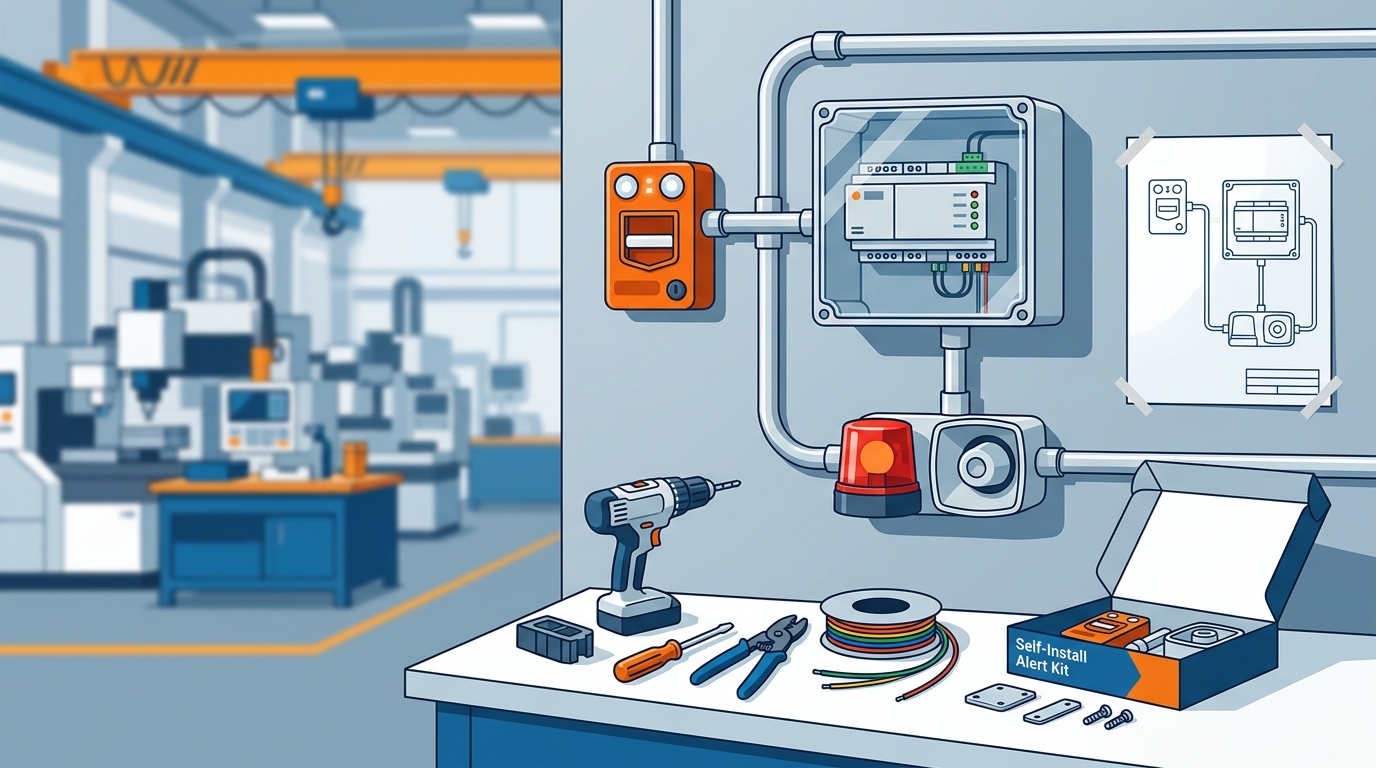
Choosing a self-install system requires distinguishing between true self-service hardware and systems that merely offer remote monitoring. A self-install emergency alert system is a device that allows facility staff to mount, power, and configure the unit without a licensed security integrator. Many traditional alarm systems require a licensed contractor for installation and ongoing maintenance, which adds cost and delays. For a manufacturing plant, the ability to deploy units in high-risk areas like production floors or gyms without waiting for a vendor visit is critical.
Key Differentiators
What to Ask: Specific Questions Before Committing
Before purchasing, you must ask questions that validate the self-installation claim. Ask the vendor if the installation process requires a licensed electrician or security professional. Inquire about the communication pathway. Does the device rely solely on the building's Wi-Fi, or does it have a cellular backup? A system that fails when the network goes down is not a reliable life-safety tool. Also, ask about the reset mechanism. Can your EHS team reset the device with a key, or does it require a vendor visit?
Critical Verification Questions
- Does the device have an integral battery backup for power outages?
- Is the communication pathway supervised for trouble signals?
- Can the response list be updated by non-technical staff?
- Does the system integrate with existing AED locations or nurse stations?
These questions ensure that the system remains operational during the exact moments when infrastructure might fail. The BluePoint FAQ section provides detailed answers on system reliability and communication redundancy, which are essential for manufacturing environments.
How to Verify: Checking Claims and Credentials
Verifying a vendor's claims involves checking certifications and monitoring standards. A reliable emergency alert system is one that is monitored by a UL-listed and FM-approved central station. This certification ensures that the monitoring facility meets strict standards for power redundancy, data backup, and operator training. You should request the UL and FM listing numbers for the central station and the hardware itself. Additionally, verify the security of the data platform. Does the Command & Control platform use enterprise-level encryption and multi-factor authentication?
Security and Compliance Checks
Review the vendor's privacy and integrity policies. The BluePoint Integrity and Privacy page outlines the specific security measures in place, including multiple independent internet connections, configured firewalls, and intrusion detection systems. These details are not just marketing fluff; they are operational requirements for a secure emergency response platform. Verify that the central station has redundant power sources and disaster recovery plans in place.
How It Works: Sequence and Duration
Understanding the operational sequence is vital for training your staff. The process begins with activation. A responder pulls the station, a simple and familiar action modeled after a fire alarm. This action triggers immediate alerts. Text, call, and notifications are sent in seconds with exact location information. The next phase is coordinated response. The right people respond at the same time, with clarity. The system orchestrates on-site communication and delivers real-time situational awareness through live maps and floor plans.
Step-by-Step Workflow
- Activation: Push in, pull down. The device stays latched until reset with a key.
- Notification: Automated alerts reach the designated medical response team via the C2 platform.
- Coordination: Live location mapping provides a common operating picture for on-site and inbound responders.
- Dispatch: Optional PSAP dispatch ensures professional responders are notified with context.
This sequence minimizes confusion and ensures that medical care begins as quickly as possible. The Command & Control platform is the engine behind this workflow, handling the complex data routing in the background.
What It Costs: Price Drivers
Cost is a significant factor in selecting a self-install system. The price of a workplace emergency alert system is driven by hardware costs, monthly monitoring fees, and the complexity of the integration. For the RapidAlert system, the starting price is $1560 plus $45 per month. This pricing structure includes the hardware and the monitoring service. Factors that can drive the price up include the number of units required, the need for optional wired ethernet connections, and custom configuration of the response lists. Conversely, self-installation saves on labor costs, which can be substantial when hiring a licensed integrator for multiple sites.
Hidden Costs to Avoid
Be wary of systems that charge extra for basic notifications or require a separate app subscription for responders. The RapidAlert system includes automated text, email, and voice communications without requiring a phone app or software for the responders. This simplicity reduces the total cost of ownership. Additionally, consider the cost of downtime. A system that requires a vendor visit for a simple reset or configuration change can incur significant labor fees over time.
What Goes Wrong: Common Mistakes
Placement and Training Errors
Placing the device in a location that is not easily accessible or visible can delay activation. It should be placed in areas with higher risk of medical emergencies, such as lunch areas, manufacturing production areas, gyms, or nurse offices. Training is also critical. Staff must know how to activate the device and what to do after activation. Without proper training, the system's potential is wasted. Regular drills and training sessions ensure that staff can act instinctively under stress.
Versus Alternatives: Comparing Options
Comparing self-install systems to traditional alarm systems reveals significant differences in deployment speed and cost. Traditional systems often require a licensed contractor for installation, which can take weeks to schedule and complete. Self-install systems like RapidAlert can be deployed in days. The table below summarizes the key differences.
| Installation | Self-installed by EHS team | Requires licensed contractor |
| Deployment Time | Days | Weeks to Months |
| Communication | Cellular dual SIM, Ethernet optional | Often relies on building network |
| Reset | Key reset by staff | Vendor visit required |
| Cost | Hardware + Monthly Fee | Hardware + Installation + Service |
This comparison highlights the efficiency of self-install systems for manufacturing plants that need rapid deployment across multiple sites. The Industrial Settings page provides more context on how these systems are used in manufacturing environments.
For a Specific Situation: Large Manufacturing Campus
For a large manufacturing campus, the answer changes based on the scale of the facility. A single building may require a few units, while a multi-building campus may need dozens. The key is to place units in areas of worker concentration. Spaces such as HR offices, front office lobbies, or high-occupancy areas benefit from police/security RERS, while production areas benefit from medical pull stations. The Compact Response Unit (CRU) offers a customizable, pre-fabricated emergency activation system that can be tailored to the unique safety needs of any environment. This flexibility is crucial for large campuses with diverse operational areas.
Scalability Considerations
Scalability is a major advantage of self-install systems. You can start with a few units in high-risk areas and expand as needed. The Command & Control platform can manage notifications from any of your facilities, providing a unified view of emergencies across the organization. This scalability ensures that your safety infrastructure grows with your business, without the need for a complete system overhaul.
Rules and Protections: Compliance and Safety
Compliance with safety regulations is a primary driver for installing emergency alert systems. OSHA requires many employers to establish an Emergency Action Plan (EAP). An effective EAP provides the framework for protecting employees in the event of an emergency. Installing a rapid response system supports this requirement by ensuring that emergencies are communicated quickly and clearly. The BluePoint blog discusses how technology creates clarity in the first four minutes of an emergency, which is critical for compliance and safety.
ADA and Accessibility
Devices must be ADA compliant and accessible. This includes proper mounting heights, tactile feedback, and visual indicators. Ensuring that all employees, including those with disabilities, can activate the system is a legal and ethical requirement. The BluePoint FAQ confirms that their devices are designed with accessibility in mind to meet ADA requirements where applicable.
Local Specifics: Regional Considerations
Local specifics can impact the choice of an emergency alert system. In rural areas, volunteer ambulance service response times may be longer, making on-site response even more critical. The Industrial Settings page highlights a case study where a global leader in agricultural machinery faced challenges due to its rural location and long volunteer ambulance service response times. In such cases, a self-install system that provides immediate notification to on-site responders is essential. Urban facilities may have shorter EMS response times, but the need for rapid on-site response remains to bridge the gap until professional responders arrive.
Community Resources
Consider the local emergency resources available in your area. If your local PSAP has a specific protocol for industrial emergencies, ensure that your system can integrate with it. The optional PSAP dispatch feature in RapidAlert allows you to configure the system to make a dispatch request to your local public safety answering point, ensuring that professional responders are notified with precise location and incident context.
Timing: When to Act
Timing is critical in emergency response. The first four minutes are often the most critical in a medical emergency. Outcomes are determined long before outside responders arrive. Installing a self-install system quickly ensures that your facility is protected during this critical window. Delaying installation leaves your employees vulnerable. The BluePoint blog emphasizes that the most consequential actions occur before police, fire, or EMS can physically arrive. Acting now, rather than later, can save lives.
Deployment Speed
Results Over Time: Measurable Outcomes
Measurable outcomes are the best indicator of a system's effectiveness. Track the time from activation to response. A well-implemented self-install system should significantly reduce this time. The BluePoint media page features testimonials from customers who have seen dramatic improvements in response times. For example, one director of safety and security at a manufacturing facility reported that first responders received immediate notification and were providing medical care to fallen employees within one minute of the alert. This level of response is only possible with a rapid, automated system.
Long-Term Benefits
Long-term benefits include improved employee confidence and reduced liability. When employees know that their facility is equipped with a rapid response system, they feel safer and more secure. This can lead to higher retention rates and lower turnover. Additionally, having a documented emergency response system can reduce liability in the event of an incident. The BluePoint About page highlights the company's mission to empower people to make more informed decisions faster to save lives, which is the ultimate long-term benefit of any emergency alert system.
Key Takeaways
- BluePoint RapidAlert is a self-install emergency alert system designed for EHS teams.
- It uses cellular dual SIM and optional ethernet for reliable communication.
- Automated alerts are sent via text, email, and voice without a mobile app.
- The system is monitored by a UL-listed and FM-approved central station.
- Starting price is $1560 plus $45 per month, with no hidden app fees.
- Regular testing and staff training are essential for system effectiveness.
- Self-install systems offer faster deployment and lower labor costs than traditional alarms.
- Compliance with OSHA and ADA requirements is supported by the system's design.
Frequently Asked Questions
Can I install a BluePoint RapidAlert system myself?
What happens when the RapidAlert device is activated?
When activated, the device sends immediate alerts via text, email, and voice to the designated medical response team. It also provides live location mapping and can optionally dispatch to the local PSAP.
Does the system require a mobile app for responders?
No, the RapidAlert system does not require a mobile app or software for responders. Automated notifications are sent via standard text, email, and voice communications.
How much does the RapidAlert system cost?
The RapidAlert system starts at $1560 plus $45 per month. This includes the hardware and monitoring service. Additional costs may apply for optional wired ethernet connections or custom configurations.
Is the system reliable if the building network goes down?
Yes, the system uses cellular dual SIM primary communication and has an integral battery backup. This ensures that alerts are transmitted even if the primary network fails or power is lost.
How often should the system be tested?
Regular testing is recommended at least quarterly to ensure device functionality, system connectivity, and proper integration with emergency services. The BluePoint FAQ provides more details on testing and maintenance.
Can the system be used for both medical and security alerts?
The RapidAlert system is specifically designed for medical alerts. For security alerts, BluePoint offers the Police Alert system. Both systems utilize the Command & Control platform for interactive rapid response coordination.
Is the system ADA compliant?
Yes, BluePoint devices are designed with accessibility in mind, including proper mounting heights, tactile feedback, and visual indicators to meet ADA requirements where applicable.