
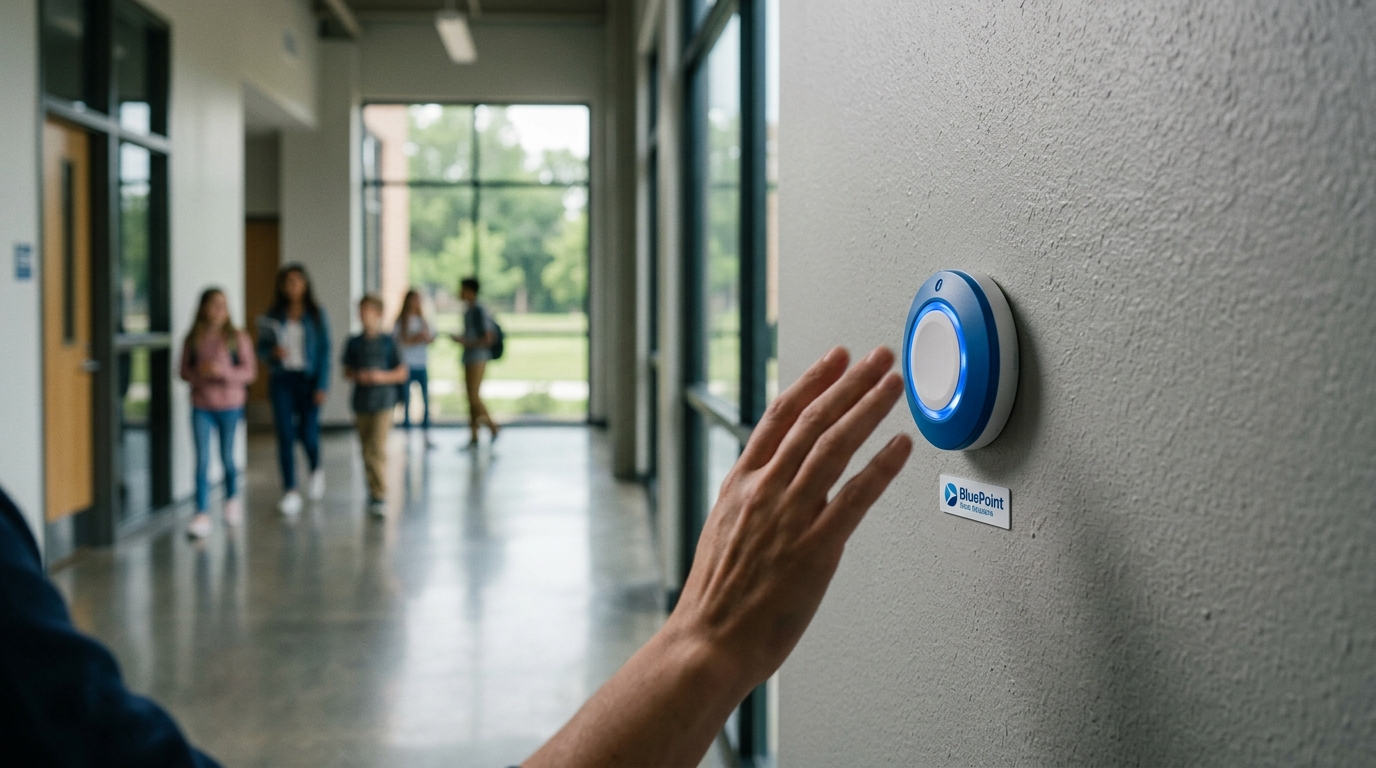
Yes, there are active shooter alert systems designed for simple, one-touch activation during high-stress emergencies. BluePoint Alert Solutions provides a Rapid Emergency Response System (RERS) that eliminates complex software logins and requires no prior training to trigger. This guide covers how panic button activation works, the reliability of hardware-based alerts, and how to integrate these tools into your facility's safety plan.
Panic Button Activation
Active shooter alert systems are physical or digital devices that trigger immediate notifications to law enforcement and building occupants. The primary challenge in emergency response is the human element. When panic sets in, complex software interfaces or multi-step phone calls often fail. BluePoint Alert Solutions addresses this by designing hardware that mimics the universal fire alarm pull station. This design leverages muscle memory and familiarity, ensuring that users can activate the system without hesitation or training.
One-Touch Physical Activation
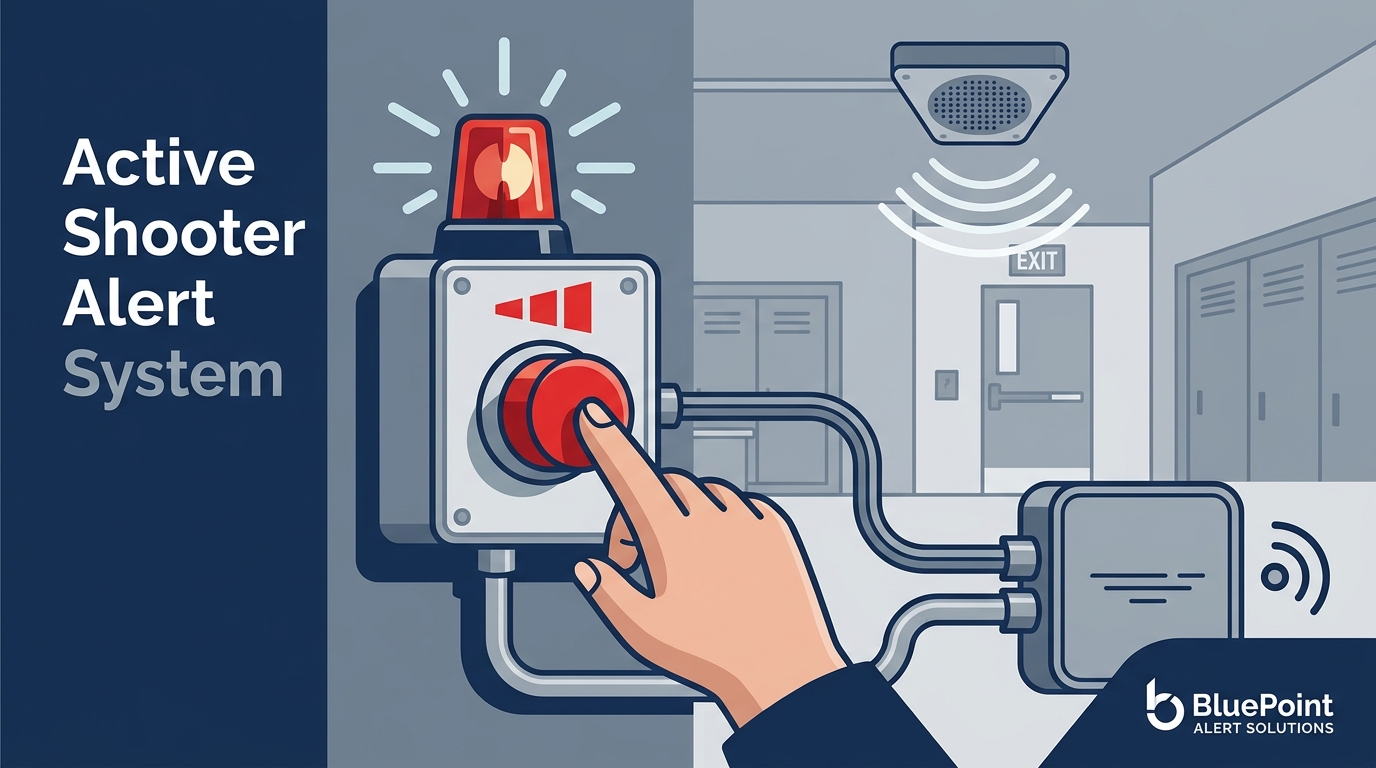
The core of the BluePoint system is the manual pull station. These devices are strategically located throughout a facility, including in high-traffic areas, lobbies, and outdoor spaces. Activation is a simple physical motion: push in and pull down. This mechanical action is intuitive and requires no digital literacy. Once activated, the device latches to prevent accidental deactivation, ensuring the alert remains active until a key is used to reset it. This design choice is critical for maintaining the integrity of the emergency signal.
Wearable Mobile Pendants
For individuals who are moving through a building or located in areas without fixed pull stations, BluePoint offers wearable mobile pendants. These devices act as portable panic buttons. They allow staff, security personnel, or visitors to trigger an alert from anywhere on the campus. The pendant sends the same critical data to the central station as a fixed pull station, including the specific location of the incident. This flexibility ensures that no part of the facility is left without a rapid activation method.
Building-Wide Notification
Upon activation, the system does not just notify police; it also alerts all building occupants. Strobe lights and audio messaging activate simultaneously. The audio messages can be customized to provide specific instructions, such as "lockdown" or "run-hide-fight." This building-wide notification reduces panic by providing clear, authoritative guidance. It ensures that everyone in the facility is aware of the emergency and the required response protocol, creating a coordinated environment for first responders.
Hardware Reliability and Redundancy
Reliability is the defining characteristic of a true life-safety system. In an emergency, a failed alert is a catastrophic failure. BluePoint Alert Solutions engineers its hardware with the same technical requirements as fire alarm systems, which are widely regarded as the most reliable systems in buildings. This approach ensures that the active shooter alert system functions under all conditions, including power outages and network failures.
Power and Communication Backup
Every BluePoint device includes an integral battery backup. This ensures that the system remains operational during power outages. The devices are supervised for low battery status, allowing maintenance teams to address issues before they become critical. For communication, the systems use redundant pathways. Primary communication is often via cellular dual SIM cards, with optional wired ethernet connections. If the primary network fails, the system automatically fails over to the backup connection. This redundancy ensures that the alert is transmitted to the central station even if the building's internet or phone lines are cut.
Central Station Monitoring
The alerts are received by a UL-listed and FM-approved central station. This station is monitored 24/7 by licensed operators. The central station infrastructure is designed with extreme redundancy, including multiple power sources and backup systems. When a BluePoint device is activated, the central station receives the signal and immediately contacts the predetermined law enforcement agency. This direct dispatch bypasses the 911 queue, providing a faster and more direct line to responders. The central station also sends notifications to designated administrators and responders via SMS, email, and phone, ensuring that all key stakeholders are informed simultaneously.
Integration with Existing Security
Modern facilities already have security infrastructure, including cameras, access control, and security staff. An effective active shooter alert system should enhance these existing tools, not replace them. BluePoint Alert Solutions integrates with current security systems to provide a comprehensive safety solution. This integration allows for a unified command and control experience, where all security data is accessible in one platform.
Command and Control Platform
The BluePoint Command & Control (C2) platform is the software backbone of the system. It provides real-time situational awareness to responders and facility leaders. The platform includes a live map of the facility, showing the exact location of the activated device. It also allows for two-way communication between building occupants and the command group. Occupants can send text or email updates, providing real-time information about the situation. This interactive communication helps responders make faster, more informed decisions. The C2 platform also supports live security camera links, allowing authorized personnel to view feeds from the incident location.
Sound Detection and Silent Alerts
For specific scenarios, BluePoint offers additional integration options. Sound detection systems can be integrated to automatically trigger an alert upon detecting gunshots or breaking glass. This provides an even faster response time, as the system activates without human intervention. Additionally, silent alert devices are available for front desk or reception areas. These devices allow a receptionist to discreetly alert police and facility staff without drawing the attention of a potential threat. This feature is crucial for protecting staff in vulnerable, high-visibility areas.
Market-Specific Solutions
BluePoint tailors its solutions for different sectors, including education, corporate, and government. In schools, the system helps reduce the time it takes to notify law enforcement, which is critical in active shooter situations. In corporate and industrial settings, the system protects employees from workplace violence and medical emergencies. The flexibility of the BluePoint system allows organizations to customize the activation and notification devices to fit their specific safety needs and facility layout.
| Feature | Traditional 911 Call | BluePoint RERS |
|---|---|---|
| Activation Method | Manual phone call, requires verbal description | One-touch pull station or wearable pendant |
| Location Data | Verbal, prone to error under stress | Automatic, precise GPS or floor plan location |
| Notification Speed | Dependent on 911 operator and dispatch queue | Instant dispatch to predetermined agency |
| Building Notification | Manual, often delayed or inconsistent | Automated strobe and audio messaging |
| Two-Way Communication | Limited to phone line | Integrated C2 platform with text/email |
Key Takeaways
- Simple activation is critical; BluePoint uses familiar pull station designs to eliminate training barriers.
- Hardware redundancy, including battery backup and cellular failover, ensures alerts are sent even during outages.
- Direct dispatch to law enforcement bypasses 911 queues, significantly reducing response times.
- The Command & Control platform provides real-time situational awareness and two-way communication.
- Wearable pendants extend alert coverage to areas without fixed pull stations.
- Integration with existing security systems, such as cameras and sound detection, enhances overall safety.
- Building-wide notification via strobes and audio reduces panic and guides occupants to safety.
- BluePoint solutions are customizable for education, corporate, and government environments.
Frequently Asked Questions
How does the BluePoint system notify first responders?
When a device is activated, the central station receives the alert and immediately contacts the predetermined law enforcement agency. Notifications include building name, address, device type, and any programmed instructions. Alerts can also be sent to responders and administrators via SMS, email, and phone, even before dispatch has contacted responders.
What types of emergencies is BluePoint designed to handle?
BluePoint systems are designed for active threat incidents, medical emergencies, workplace violence, hazmat and weather emergencies, and other urgent situations requiring immediate law enforcement or emergency responder notification. Our systems provide interactive communication between parties and increased situational awareness with tools like video streams and live mapping tools.
What is the difference between BluePoint Police Alert and Medical Alert devices?
Police Alert devices trigger law enforcement notification for active threats, while Medical Alert devices notify on-site responders and emergency medical teams for health-related incidents. Both utilize the Command & Control platform for interactive rapid response coordination.
Can BluePoint systems provide alerts during off-hours or holidays?
Yes. Alerts are always transmitted to the designated first responders, on-site personnel and administrators regardless of time or day, ensuring 24/7 coverage.
Can BluePoint systems work if the building network goes down?
Yes. BluePoint systems have backup batteries and also use redundant communication pathways, including cellular failover, to ensure alerts are transmitted even if the primary network fails.
How secure is the BluePoint Command & Control platform?
Command & Control uses enterprise-level encryption, multi-factor authentication, and secure server hosting to protect sensitive data and ensure only authorized personnel can access system controls.
Are BluePoint devices ADA compliant and accessible?
Yes. Devices are designed with accessibility in mind, including proper mounting heights, tactile feedback, and visual indicators to meet ADA requirements where applicable.
How quickly can a BluePoint system be installed in a school or office?
Installation timelines vary by building size and complexity. Typical installations for standard setups can be completed within 1–3 days, while custom configurations may take longer. BluePoint provides detailed installation planning to minimize disruption.
Conclusion
Choosing an active shooter alert system that is simple to activate is a critical decision for any organization responsible for the safety of its people. BluePoint Alert Solutions provides a robust, reliable, and intuitive solution that bridges the gap between crisis and control. By leveraging familiar hardware, redundant communication pathways, and a powerful command and control platform, BluePoint ensures that help arrives fast when it matters most. To explore how a Rapid Emergency Response System can be tailored to your facility's specific needs, today.