

Medical Emergency Interactive Notification Systems for Industrial & Commercial Facilities
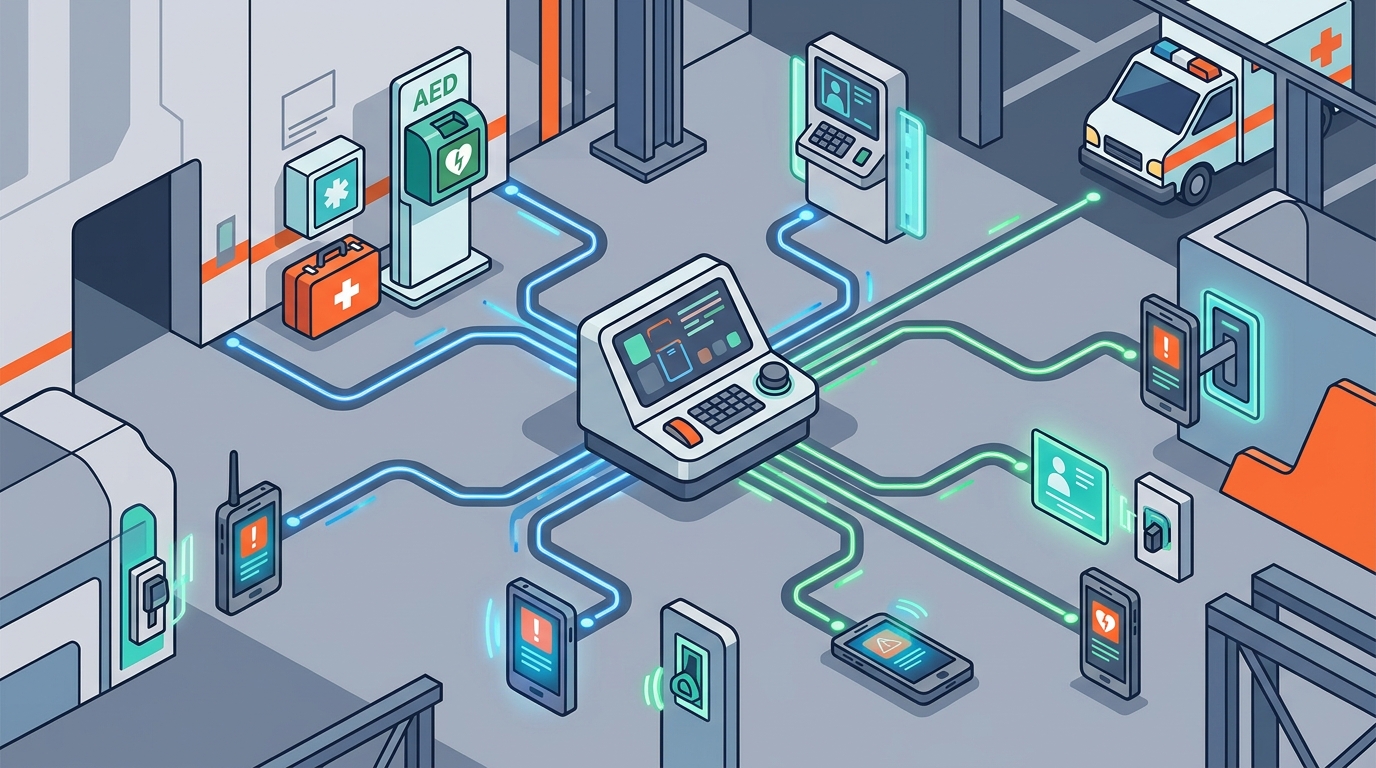
BluePoint Alert Solutions provides a medical emergency interactive notification system that connects all internal parties on one channel. This platform unifies on-site staff, security, and first responders through a single Command & Control interface. It eliminates fragmented communication during critical health incidents. This guide covers selection criteria, verification methods, operational workflows, and cost drivers for industrial and commercial environments.
How to Choose a System
Selecting the right medical emergency interactive notification system requires distinguishing between basic alerting and true interactive coordination. A standard alarm system broadcasts a signal but does not facilitate two-way dialogue. A superior system enables real-time situational awareness where responders can query occupants and receive status updates. This distinction is critical in industrial facilities where noise levels and complex layouts hinder verbal communication.
Interactive vs. One-Way Alerting
One-way systems send a notification to a list of contacts. The recipient sees the alert but cannot easily reply with context. Interactive systems, such as the BluePoint Command & Control platform, allow building occupants to provide real-time situational awareness through simple text or email responses. This creates a feedback loop that reduces uncertainty for the command group. In a medical emergency, knowing if a patient is conscious or if an AED has been retrieved is vital information that one-way systems fail to capture.
Integration with Existing Infrastructure
Effective systems integrate with existing security infrastructure rather than replacing it. Look for platforms that can link with live security camera feeds and access control systems. This integration provides responders with visual confirmation of the incident location. It also allows for the tracking of personnel movement during the crisis. A system that operates in a silo forces responders to switch between multiple applications, increasing cognitive load and response time.
Questions to Ask Before Committing
Before signing a contract, facility managers must ask specific technical and operational questions. Vague answers regarding reliability or communication pathways indicate potential gaps in the service. These questions help validate the vendor's capability to handle the unique challenges of industrial and commercial spaces.
Communication Redundancy
Ask how the system maintains connectivity if the primary network fails. Does the hardware have cellular failover capabilities? Are there backup batteries that can sustain operations during a power outage? A robust system uses redundant communication pathways to ensure alerts are transmitted even if the building's internet or phone lines go down. This redundancy is non-negotiable for life-safety applications.
Response Team Coordination
Inquire about how the system manages multiple response teams simultaneously. Can the command group segment notifications to different groups, such as security, medical, and management? Can responders view a live map of the facility with the incident location marked? These features ensure that the right people receive the right information without causing panic among the general population.
Verifying Claims and Credentials
Vendor claims must be verified against independent standards and certifications. Trusting marketing materials alone is insufficient for life-safety systems. Verification ensures that the system meets industry benchmarks for reliability and security.
Certifications and Listings
Check if the central station monitoring is listed by Underwriters Laboratories (UL) and approved by Factory Mutual (FM). These certifications indicate that the monitoring facility meets rigorous standards for power redundancy, data backup, and physical security. For example, a UL-listed station should have multiple power sources and real-time backups. Verify that the specific vendor's central station holds these listings and exceeds basic requirements where possible.
Security Protocols
Verify the security measures protecting the Command & Control platform. Does it use enterprise-level encryption and multi-factor authentication? Are server hosting environments secure? These protocols protect sensitive data and ensure that only authorized personnel can access system controls. Request documentation of these security measures during the evaluation process.
Operational Workflow and Timing
Understanding the sequence of events during an activation is crucial for evaluating a system's effectiveness. The workflow should be simple, intuitive, and fast. Every second counts in a medical emergency, and the system must minimize human touchpoints.
Activation and Notification
The process begins with a simple activation, often via a pull station or wearable device. The interface should be familiar, similar to a fire alarm pull station, to reduce training requirements. Upon activation, the system immediately sends automated alerts to designated medical responders via text, email, and voice. These notifications include precise location information and incident context. This happens within seconds of activation.
Interactive Coordination
Once notified, responders can engage in two-way communication with the command group. Building occupants can report their status or provide updates on the patient's condition. The command group can view live maps and camera feeds to assess the situation. This interactive phase allows for coordinated action, such as directing an AED to the scene or clearing a path for emergency personnel. The goal is to bridge the gap between the initial alert and the arrival of professional responders.
Cost Drivers and Budgeting
Costs for medical emergency interactive notification systems vary based on several factors. Understanding these drivers helps in creating an accurate budget. Pricing is not just about hardware; it includes monitoring, software, and support services.
Hardware and Installation
The number and type of activation devices impact the initial cost. Pull stations, wearable pendants, and strobe lights are common components. Installation complexity, such as the need for new wiring or cellular connectivity, also affects pricing. Pre-fabricated units can reduce installation time and cost. Consider the total cost of ownership, including maintenance and potential upgrades.
Monitoring and Software
Monthly fees typically cover central station monitoring and access to the Command & Control platform. These fees ensure 24/7 coverage and software updates. The cost may vary based on the number of users and the level of support provided. Compare the value of the interactive features against the monthly cost. A slightly higher monthly fee for a system with robust two-way communication may be more cost-effective than a cheaper one-way system that fails to provide critical context.
Common Mistakes and Avoidance
Facilities often make errors during the selection and implementation of emergency notification systems. Avoiding these mistakes ensures that the system performs as intended during a crisis.
Underestimating Training Needs
Assuming that a simple system requires no training is a common error. While activation should be intuitive, responders need to understand how to use the interactive features. Conduct regular drills to ensure that staff are comfortable with the platform. Familiarity with the system reduces hesitation during an actual emergency.
Neglecting Maintenance
Failing to test the system regularly can lead to failures when it is needed most. Implement a schedule for quarterly testing of devices and communication pathways. Verify that battery backups are functional and that cellular connections are stable. Regular maintenance ensures that the system remains reliable over time.
Comparison with Alternatives
Medical emergency interactive notification systems differ significantly from traditional alarm systems and mass notification platforms. Understanding these differences helps in making an informed decision.
| Feature | Traditional Alarm System | Mass Notification Platform | Interactive Notification System |
|---|---|---|---|
| Communication Direction | One-Way | One-Way or Limited Two-Way | Full Two-Way |
| Situational Awareness | None | Basic Status Updates | Real-Time Data Sharing |
| Integration with Cameras | Rare | Optional | Standard |
| Response Coordination | Manual | Semi-Automated | Automated and Interactive |
Traditional alarm systems are designed for fire detection and do not provide the context needed for medical emergencies. Mass notification platforms are excellent for broadcasting information but often lack the interactive tools for real-time coordination. Interactive systems, like those offered by BluePoint Alert Solutions, combine the reliability of life-safety hardware with the flexibility of modern software. This combination provides the most comprehensive solution for complex facilities.
Application in Specific Scenarios
The effectiveness of a medical emergency interactive notification system can vary depending on the specific type of facility. Tailoring the system to the unique challenges of the environment ensures optimal performance.
Industrial Manufacturing
In manufacturing plants, high noise levels and dispersed work areas make verbal communication difficult. Interactive systems with strobe lights and audio messaging can cut through the noise. The ability to pinpoint the exact location of an injury is crucial in large facilities. Wearable devices allow workers to activate alerts from anywhere on the floor, ensuring that help is dispatched to the correct area immediately.
Corporate Offices
Corporate environments often have multiple floors and complex layouts. The system should provide live floor plans to help responders navigate the building. Integration with access control can help track the movement of personnel during the incident. This ensures that responders can account for all employees and provide assistance where it is needed most.
Regulatory Rules and Protections
Emergency notification systems must comply with various regulations and standards. Adhering to these rules ensures that the system is legally compliant and provides the necessary level of protection.
OSHA Requirements
The Occupational Safety and Health Administration (OSHA) requires many employers to establish an Emergency Action Plan (EAP). An effective EAP provides the framework for responding to emergencies. While OSHA does not mandate specific technology, it emphasizes the need for clear communication and rapid response. An interactive notification system supports these requirements by facilitating clear and rapid communication between all parties involved.
ADA Compliance
Devices must be designed with accessibility in mind to meet the Americans with Disabilities Act (ADA) requirements. This includes proper mounting heights, tactile feedback, and visual indicators. Ensuring that the system is accessible to all employees and visitors is both a legal obligation and a moral imperative. It ensures that everyone has the opportunity to activate the system and receive notifications.
Local Implementation Specifics
Local factors can influence the implementation and effectiveness of a medical emergency interactive notification system. Understanding these specifics helps in tailoring the system to the local context.
Emergency Services Response Times
Response times for professional emergency services vary by location. In rural areas, response times may be longer, making on-site response more critical. In urban areas, response times may be shorter, but traffic congestion can still delay arrival. An interactive system can bridge this gap by enabling on-site teams to provide immediate care and coordinate with incoming responders. This is particularly important in facilities located in areas with limited emergency services coverage.
Local Regulations
Local building codes and fire regulations may have specific requirements for emergency notification systems. It is important to consult with local authorities to ensure that the system meets all applicable regulations. This includes requirements for device placement, notification methods, and maintenance schedules. Compliance with local regulations ensures that the system is accepted by local authorities and can be integrated with local emergency services.
Strategic Timing for Deployment
The timing of deployment can impact the effectiveness of a medical emergency interactive notification system. Acting promptly ensures that the system is in place before an emergency occurs.
Pre-Installation Planning
Begin the planning process well in advance of installation. This includes assessing the facility's needs, selecting the appropriate devices, and planning the installation schedule. Early planning allows for a smoother installation process and minimizes disruption to operations. It also provides time for training staff on the new system.
Post-Installation Testing
After installation, conduct thorough testing to ensure that the system is functioning as intended. This includes testing activation devices, communication pathways, and interactive features. Regular testing should be scheduled to maintain system reliability. Prompt identification and resolution of any issues ensures that the system is ready when needed.
Long-Term Measurable Outcomes
Implementing a medical emergency interactive notification system yields measurable outcomes over time. Tracking these outcomes helps in evaluating the system's effectiveness and identifying areas for improvement.
Response Time Reduction
One of the primary benefits of an interactive system is the reduction in response time. By providing precise location information and facilitating two-way communication, the system enables faster and more coordinated responses. Track the time from activation to the arrival of on-site responders and the arrival of professional emergency services. A reduction in these times indicates that the system is effective.
Improved Outcomes
Improved patient outcomes are a direct result of faster and more coordinated responses. Track the number of successful resuscitations and the overall health outcomes of patients treated on-site. An increase in successful outcomes indicates that the system is making a positive impact. Regularly review these metrics to ensure that the system continues to meet the facility's needs.
Key Takeaways
- Interactive systems provide two-way communication, unlike one-way alarm systems.
- Verify vendor certifications such as UL and FM listings for reliability.
- Redundant communication pathways are essential for system uptime.
- Costs include hardware, installation, and monthly monitoring fees.
- Regular testing and training are critical for system effectiveness.
- Integration with existing security infrastructure enhances situational awareness.
- Local regulations and response times should influence system design.
- Long-term tracking of response times and outcomes validates system performance.
Frequently Asked Questions
What is a medical emergency interactive notification system?
A medical emergency interactive notification system is a platform that connects on-site staff, security, and first responders through a single channel. It enables real-time two-way communication and situational awareness during health incidents.
How does BluePoint Alert Solutions differ from traditional alarm systems?
BluePoint Alert Solutions offers interactive communication and live mapping, whereas traditional alarm systems only provide one-way alerts. This allows for coordinated response and real-time data sharing.
Can the system work if the building network goes down?
Yes, BluePoint systems have backup batteries and redundant communication pathways, including cellular failover, to ensure alerts are transmitted even if the primary network fails.
What types of emergencies is the system designed to handle?
The system is designed for medical emergencies, active threats, workplace violence, and other urgent situations requiring immediate notification and coordination.
How secure is the Command & Control platform?
The platform uses enterprise-level encryption, multi-factor authentication, and secure server hosting to protect sensitive data and ensure only authorized personnel can access system controls.
How often should the system be tested?
Regular testing is recommended at least quarterly to ensure device functionality, system reliability, and communication pathway integrity.