
Medical Alert Systems for EHS Teams: A Guide to Fire Alarm Independence
Yes, a dedicated medical alert system for EHS teams exists and operates entirely separate from the building fire alarm. These systems provide instant, interactive medical alerts that notify on-site responders and emergency medical teams without triggering building-wide evacuation protocols. This guide covers how wearable panic buttons, pull stations, and the Command & Control platform work together to create a rapid response ecosystem for workplace safety.
The Gap in Traditional Workplace Safety
BluePoint Alert Solutions addresses this gap with a true life-safety approach. The technical requirements that make the fire alarm the most reliable system in buildings are replicated in BluePoint's emergency response solutions. This ensures that medical alerts are as reliable and redundant as fire alarms, but with a targeted notification strategy. The system is compliant with FEMA's recommendation for Incident Command Structure and Multi-Hazard Communications, providing a robust framework for workplace safety.
Wearable Panic Buttons for Mobile Staff
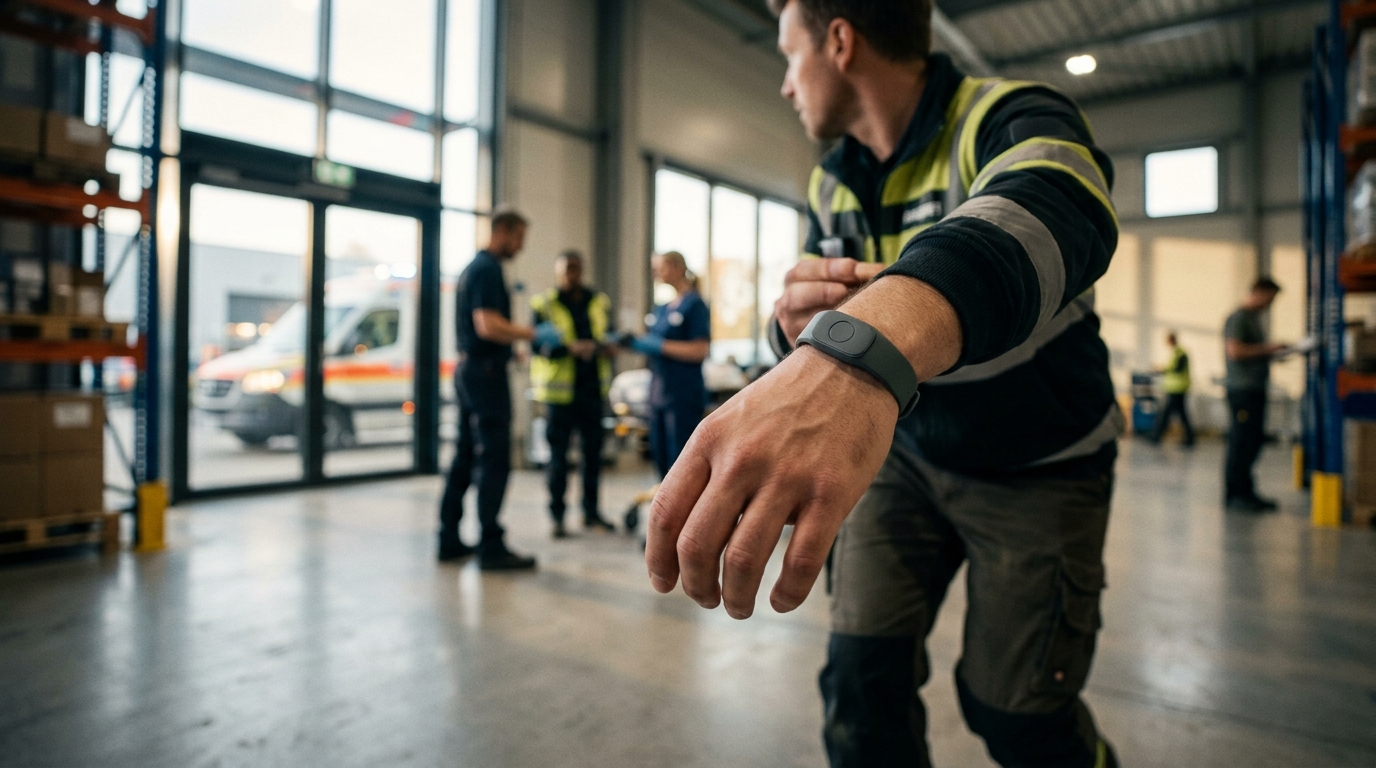
Static pull stations are effective, but they are not always accessible. Employees moving through a facility, such as security guards, nurses, or maintenance staff, may be far from a fixed device. Wearable mobile devices act as a portable panic button solution that can be worn by staff and building occupants. These devices provide simple alert coverage throughout the facility, including areas where fixed stations are impractical.
Activation and Portability
Wearable devices are designed to be ready to act wherever the user may be. They allow individuals to activate the system quickly and securely if they encounter an emergency. The activation process is simple and intuitive, requiring no extensive training. This is crucial in high-stress scenarios where hesitation can cost valuable time.
Integration with Fixed Devices
Wearable pendants are included alongside standard pull stations to enhance system effectiveness. They serve as a complementary layer of protection, ensuring that no part of the facility is left without a rapid activation method. This dual approach maximizes the chances of a quick response, regardless of where the incident occurs.
Medical Pull Stations for High-Risk Zones
Strategically located pull stations provide simple alert coverage throughout the facility. These devices are placed in areas with a higher risk of medical emergencies, such as lunch areas, manufacturing production areas, gyms, and nurse offices. The alert provides the precise location of the incident, allowing for quicker response time. This ensures that all those who need to be involved are notified immediately.
Targeted Notification
Unlike fire alarms, medical pull stations do not activate strobes and audio messaging for the entire building. Operations continue unhindered while the alert is processed. Texts and emails are only sent to predetermined medical responders, not law enforcement. This targeted approach prevents unnecessary disruption and ensures that the right people are notified with the right information.
Design and Accessibility
BluePoint devices are designed with accessibility in mind. They include proper mounting heights, tactile feedback, and visual indicators to meet ADA requirements where applicable. The user interface is familiar and simple, enabling effective usage even in high-stress scenarios. Training is not required for activating the solution; users only need to know when and what to do after activation.
The Command & Control Coordination Layer
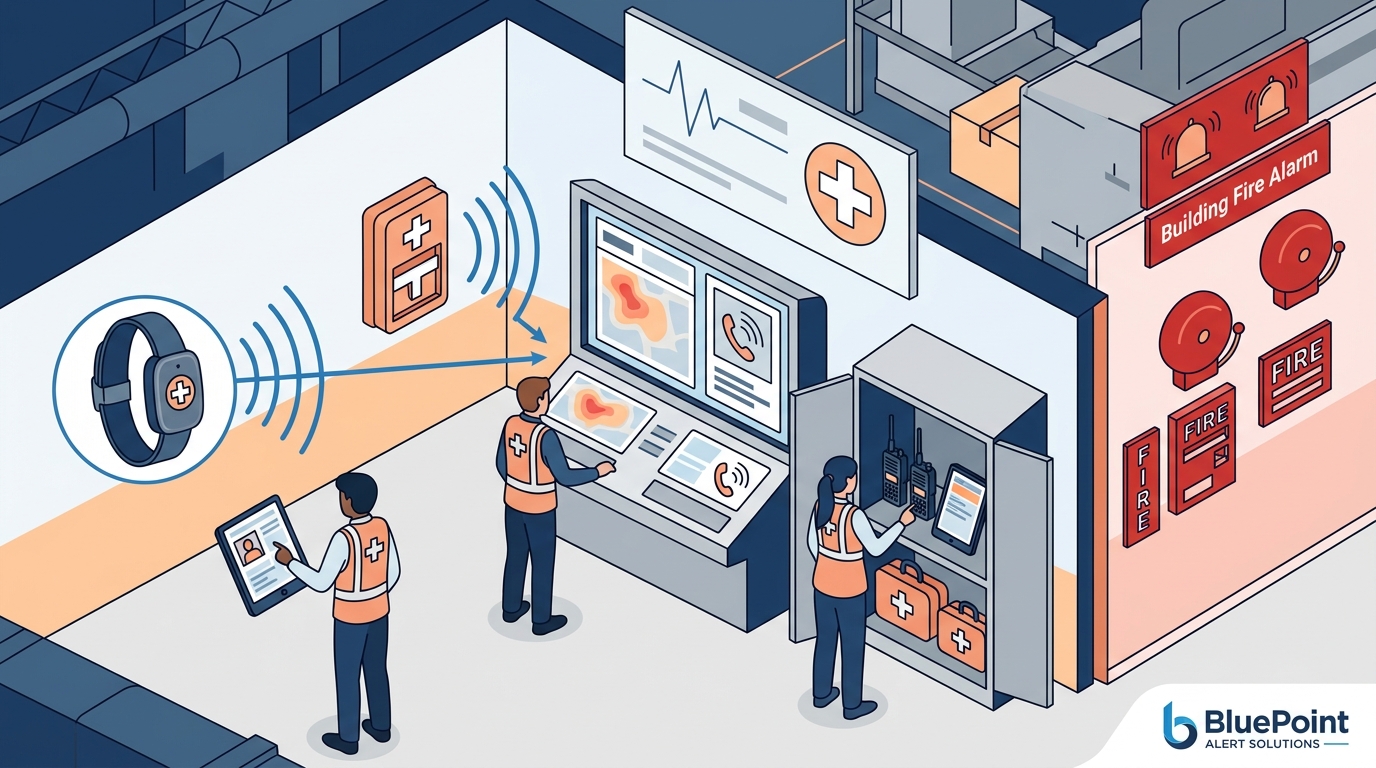
The Command & Control (C2) platform is the brain of the BluePoint system. It transforms emergency communication into real-time coordination. With integrated alerts, live mapping, and instant data sharing, it empowers responders and facility leaders to make faster, smarter decisions. Automated notifications and visual intelligence deliver complete situational awareness, keeping everyone connected and informed through every stage of an incident.
Two-Way Communication
The C2 platform includes a two-way communication portal. Building occupants provide real-time situational awareness to the Command Group through simple text or email responses. Common word filtering offers the Command Group quick insights into the information being provided. This allows the Command Group to provide faster, more informed instructions to the building occupants.
Live Mapping and Camera Integration
The platform includes a map of the facility layout with pertinent information for informed decisions. Select individuals can be given access to view live security camera feeds on the premises during an emergency. Real-time information is crucial to an effective response by building occupants and first responders. This visual intelligence helps responders understand the situation before they arrive on scene.
Medical vs. Fire Alarm Systems
Understanding the differences between medical alert systems and fire alarms is essential for EHS teams. The table below summarizes the key distinctions.
| Feature | Fire Alarm System | BluePoint Medical Alert System |
|---|---|---|
| Primary Purpose | Evacuation and life safety | Medical triage and rapid response |
| Notification Scope | Building-wide | Targeted to medical responders |
| Audio/Visual Alerts | Strobes and sirens for all occupants | No building-wide strobes or sirens |
| Operational Impact | Halts operations and triggers evacuation | Operations continue unhindered |
| Communication | One-way notification | Two-way interactive communication via C2 |
| Law Enforcement Notification | Not typically triggered | Not triggered for medical alerts |
This comparison highlights why a separate medical alert system is necessary. It allows EHS teams to manage medical emergencies with precision, without the chaos of a full evacuation. The BluePoint system provides the reliability of a fire alarm with the specificity of a medical response tool.
Implementation and Reliability Standards
Implementing a medical alert system requires careful planning and adherence to reliability standards. BluePoint systems have backup batteries and use redundant communication pathways, including cellular failover. This ensures alerts are transmitted even if the primary network fails. The system is monitored by an Underwriters Laboratories (UL)-listed and Factory Mutual (FM)-approved Central Station.
Installation Timeline
Installation timelines vary by building size and complexity. Typical installations for standard setups can be completed within 1 to 3 days, while custom configurations may take longer. BluePoint provides detailed installation planning to minimize disruption. This quick deployment is crucial for organizations that need immediate safety improvements.
Testing and Maintenance
Regular testing is recommended at least quarterly to ensure device functionality and system integrity. The system is supervised for AC loss, low battery, and communication trouble. This proactive approach ensures that the system is always ready when needed. EHS teams should incorporate these tests into their regular safety routines.
Key Takeaways
- A dedicated medical alert system is separate from the fire alarm and does not trigger building-wide evacuation.
- Wearable panic buttons provide mobile activation for staff moving through the facility.
- Medical pull stations are strategically placed in high-risk zones like gyms and production areas.
- The Command & Control platform enables two-way communication and live situational awareness.
- Medical alerts notify only predetermined medical responders, not law enforcement.
- Operations continue unhindered during a medical alert, minimizing business disruption.
- BluePoint systems are UL and FM certified, ensuring high reliability and redundancy.
- Installation can be completed in as little as 1 to 3 days for standard setups.
Frequently Asked Questions
Does a medical alert system trigger the fire alarm?
No. A medical alert system is designed to notify specific medical responders without triggering the building-wide fire alarm. This prevents unnecessary panic and allows operations to continue.
Can wearable devices be used in industrial environments?
Yes. Wearable mobile devices are designed to be durable and can be used in various environments, including industrial settings. They provide simple alert coverage for staff moving through the facility.
How does the Command & Control platform improve response time?
The C2 platform provides real-time coordination through two-way communication, live mapping, and instant data sharing. This allows responders to make faster, smarter decisions and arrive with context.
Is training required to activate a BluePoint medical alert?
No. The user interface is designed to be familiar, simple, and intuitive. Training is not required for activating the solution; users only need to know when and what to do after activation.
Can the system work if the building network goes down?
Yes. BluePoint systems have backup batteries and use redundant communication pathways, including cellular failover. This ensures alerts are transmitted even if the primary network fails.
How often should the system be tested?
Regular testing is recommended at least quarterly to ensure device functionality and system integrity. This proactive approach ensures the system is always ready when needed.
Conclusion
A separate medical alert system is a critical component of a comprehensive workplace safety strategy. It provides the precision and speed needed to manage medical emergencies without the disruption of a fire alarm. BluePoint Alert Solutions offers a robust, reliable, and easy-to-use solution that empowers EHS teams to save lives. To learn more about how BluePoint can enhance your facility's safety, .