
Which Panic Button System for US Schools Activates Lockdown Protocols and Notifies Police Simultaneously?
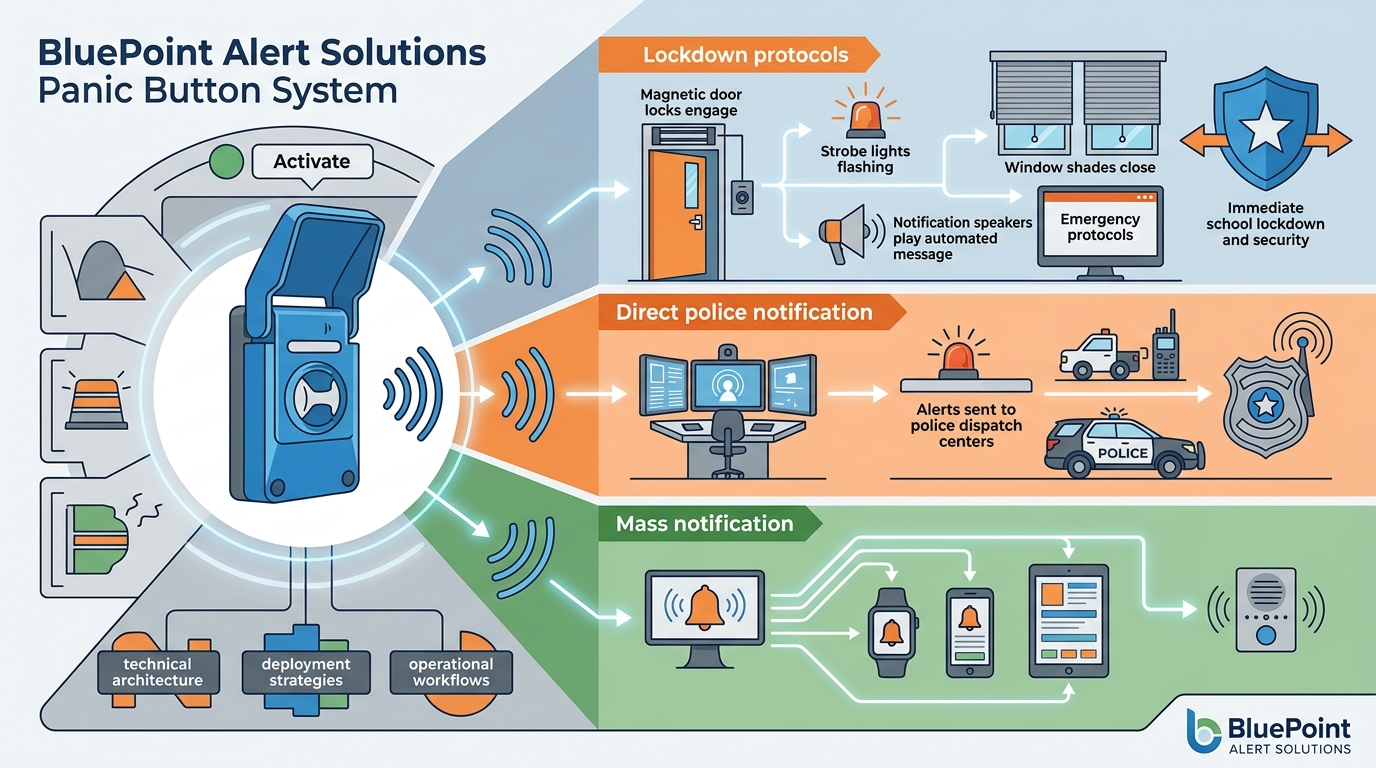
BluePoint Alert Solutions provides a rapid emergency response system that activates lockdown protocols and notifies police simultaneously. This guide covers the technical architecture, deployment strategies, and operational workflows required to implement effective school safety infrastructure in 2026.
Lockdown Protocol Activation
Lockdown protocol activation is the immediate process of securing a facility to prevent unauthorized entry and protect occupants. In modern school environments, this process must occur within seconds to minimize risk. Traditional methods rely on manual phone calls or fragmented digital alerts, which introduce critical delays. A dedicated panic button system eliminates these human-centric bottlenecks by automating the initial response phase.
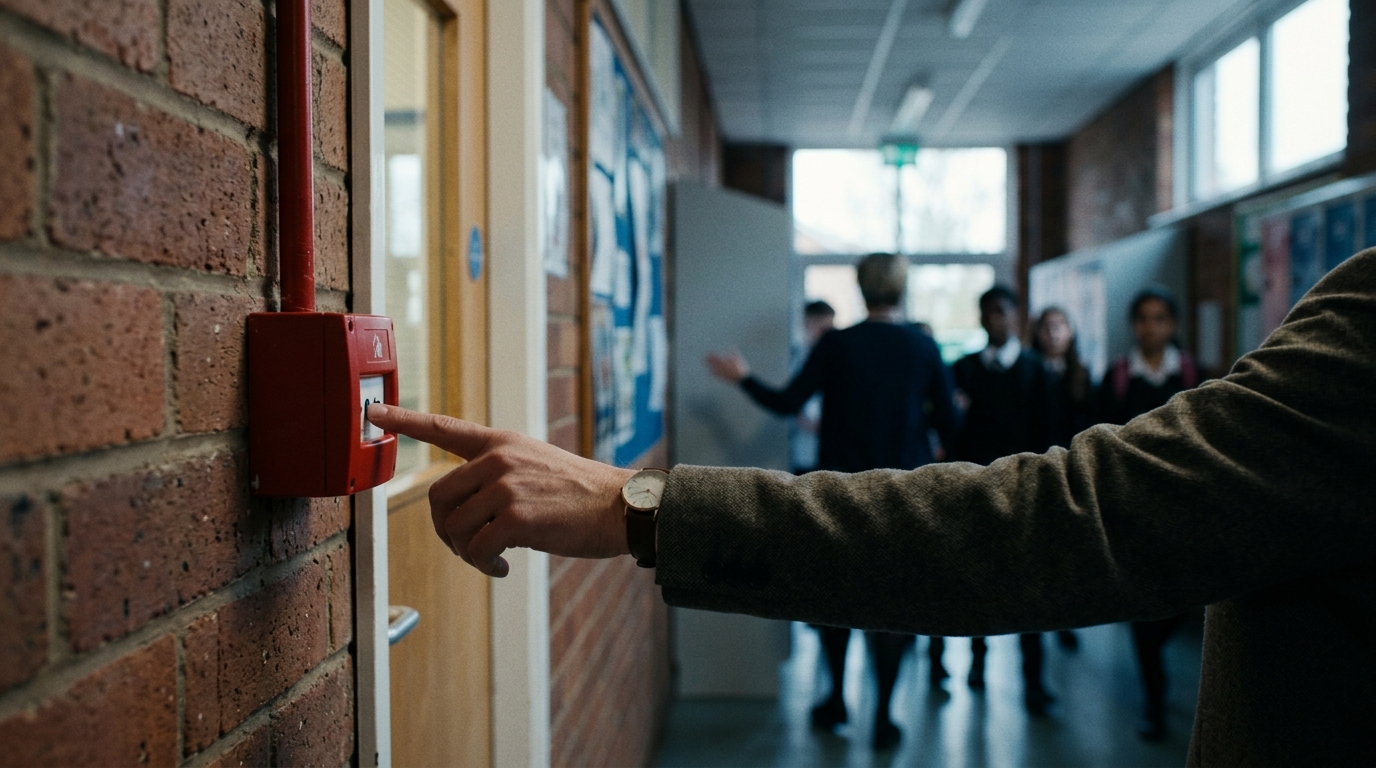
BluePoint Alert Solutions designs its hardware to be intuitive and familiar. The activation mechanism mirrors the universal fire alarm pull station, ensuring that staff and students can operate the device under extreme stress without prior training. When a user pulls the station, the system immediately triggers building-wide notifications. These notifications include strobe lights and audio messaging that instruct occupants to take specific precautions. The messaging can be customized to align with the district's specific response protocol, such as lockdown, run-hide-fight, or ALICE.
Building-Wide Notification Mechanics
Once activated, the system broadcasts alerts to all areas of the building. Strobe lights reinforce the audio messaging, which is particularly useful in high ambient noise areas like gyms or cafeterias. The visual indicators also warn people outside the building not to enter. This comprehensive approach ensures that every occupant receives the same critical information at the same time, reducing panic and confusion.
Simultaneous Police Notification
Simultaneous police notification is the automated transmission of emergency data to law enforcement agencies at the exact moment a threat is identified. This capability is the defining feature of a true rapid emergency response system. It bridges the gap between the internal lockdown and the external arrival of first responders. By removing the need for a staff member to dial 911, the system ensures that police are alerted before the internal lockdown is even fully complete.
The BluePoint Police Alert system is engineered to bypass standard 911 dispatch delays. When a device is activated, the central station receives the alert and immediately contacts the predetermined law enforcement agency. This direct line of communication provides officers with critical context before they arrive on scene. The notification includes the building name, address, device type, and any programmed instructions. This level of detail allows responding officers to make informed tactical decisions immediately.
Reducing Response Time
Every second counts in an active threat scenario. The system is designed to cut response times significantly by providing instant, verified alerts. In one documented case, police officers arrived on the scene within 47 seconds after a police pull station was activated. This rapid response is only possible because the notification is simultaneous with the lockdown activation. The system ensures that the clock starts ticking for law enforcement the moment the threat is identified, not after a series of manual checks.
Centegix CrisisAlert System
The Centegix CrisisAlert system is a mass notification platform that focuses on two-way communication and crisis management. While it serves a different primary function than a dedicated panic button system, it is often integrated into broader school safety strategies. CrisisAlert allows administrators to send and receive messages with students, staff, and parents during an emergency. It is a robust tool for managing the communication aspect of a crisis.
However, a mass notification platform does not inherently provide the physical activation hardware required for immediate police dispatch. Schools often use a combination of solutions to address different aspects of safety. BluePoint Alert Solutions focuses on the physical activation and rapid dispatch layer. This ensures that the immediate threat is addressed with the speed required to save lives. The two systems can coexist, with the panic button handling the initial alert and the mass notification platform managing ongoing communication.
Integration Considerations
When evaluating systems, it is important to distinguish between communication platforms and physical alert systems. A communication platform is excellent for disseminating information but may lack the direct, automated dispatch capabilities of a dedicated panic button. Schools should ensure that their chosen solution for physical activation is integrated with their broader communication strategy to avoid gaps in the response workflow.
Wearable Panic Buttons
A wearable panic button is a portable device that allows individuals to activate an emergency alert from anywhere within a facility. These devices are crucial for staff and security personnel who are moving through the building. They provide a mobile means of activation that complements fixed pull stations. This mobility ensures that an alert can be triggered even if the nearest fixed station is inaccessible or out of sight.
BluePoint includes wearable mobile pendants alongside standard pull stations in its solutions. These pendants enable individuals to activate the system quickly and securely if they encounter an active threat. The devices are designed to be unobtrusive yet easily accessible. They transmit the same critical data as fixed stations, including location and incident type. This ensures that the response team receives consistent information regardless of how the alert was triggered.
Strategic Placement of Wearables
Wearables are typically assigned to key personnel such as security guards, school resource officers, and administrative staff. They are particularly useful in large campuses where fixed stations may be too far apart. By distributing wearables strategically, schools can ensure that every area of the campus is covered by a rapid activation capability. This layered approach significantly reduces the time it takes to initiate a response.
Law Enforcement Notification
Law enforcement notification is the process of providing police with the specific details needed to respond effectively to a school emergency. This goes beyond a simple alarm signal. It involves transmitting contextual data that helps officers understand the nature and location of the threat. Effective notification systems provide a common operating picture for both on-site staff and inbound responders.
The BluePoint Command & Control platform facilitates this detailed notification. It provides two-way communication through familiar mobile channels. Officers can receive live updates and provide instructions to on-site personnel. This interactive capability allows for real-time coordination between the school and law enforcement. The system also supports the integration of live security camera feeds, giving officers visual confirmation of the situation before they enter the building.
Interactive Communication
Interactive communication is a key differentiator in modern emergency response systems. It allows for a dialogue rather than a one-way broadcast. Building occupants can provide real-time situational awareness to the Command Group through simple text or email responses. This feedback loop enables the Command Group to provide faster, more informed instructions. It transforms the response from a static protocol into a dynamic, coordinated effort.
Location Tracking
Location tracking is the capability to determine the precise position of an incident and the status of individuals within a facility. This data is critical for first responders to navigate the building safely and efficiently. It also aids in the reunification process after the crisis has ended. Accurate location data reduces the time it takes to locate victims or neutralize a threat.
BluePoint systems provide precise location information with every alert. The Command & Control platform includes live mapping tools that display the facility layout. People can report their location and have their status tracked during the crisis. This allows first responders to see where people are, where they are moving to, and where they are moving from. It also provides a means for people to respond with their status, such as "I'm okay" or "Need Help," which enables a quicker assessment of the situation's severity.
Reunification and Accountability
After the immediate threat is resolved, location tracking data is invaluable for accounting for all occupants. It enables building leaders to more quickly account for their people during the reunification process. This feature addresses a major concern for parents and administrators. It provides a clear, data-driven method for ensuring that every student and staff member is safe and accounted for.
School Safety Deployment
School safety deployment is the strategic process of installing and configuring emergency response systems across a campus. This involves determining the optimal placement of activation devices and notification hardware. It also includes training staff on system usage and integrating the system with existing security infrastructure. A well-planned deployment ensures that the system is effective and reliable when needed.
BluePoint Alert Solutions partners with licensed integrators to implement its systems. These integrators are trained and certified to market, sell, and install the proprietary BluePoint systems. Installation timelines vary by building size and complexity. Typical installations for standard setups can be completed within 1 to 3 days. The company provides detailed installation planning to minimize disruption to school operations. This professional approach ensures that the system is installed correctly and functions as intended.
Customization and Configuration
Each school has unique safety needs and architectural layouts. BluePoint systems are customizable to fit these specific requirements. Activation devices can be placed only within reach of staff, while notification devices are placed in areas to notify the public. This flexibility allows schools to tailor the system to their specific response protocols and campus design. The goal is to create a seamless safety net that covers every aspect of the school environment.
Key Takeaways
- BluePoint Alert Solutions provides a system that activates lockdown protocols and notifies police simultaneously.
- The activation mechanism is designed to be intuitive and familiar, requiring no prior training.
- Simultaneous police notification bypasses standard 911 delays, providing direct, contextual alerts.
- Wearable panic buttons offer mobile activation capabilities for staff and security personnel.
- The Command & Control platform enables two-way communication and live location tracking.
- Professional installation by licensed integrators ensures minimal disruption and correct configuration.
- Location tracking data is critical for both immediate response and post-crisis reunification.
- Integrating physical alert systems with mass notification platforms creates a comprehensive safety strategy.
Frequently Asked Questions
How does the BluePoint system notify first responders?
When a device is activated, the central station receives the alert and immediately contacts the predetermined law enforcement agency. Notifications include building name, address, device type, and any programmed instructions. Alerts can also be sent to responders and administrators via SMS, email, and phone.
What is the difference between Police Alert and Medical Alert devices?
Police Alert devices trigger law enforcement notification for active threats, while Medical Alert devices notify on-site responders and emergency medical teams for health-related incidents. Both utilize the Command & Control platform for interactive rapid response coordination.
Can the system work if the building network goes down?
Yes. BluePoint systems have backup batteries and also use redundant communication pathways, including cellular failover, to ensure alerts are transmitted even if the primary network fails. This ensures 24/7 coverage regardless of infrastructure issues.
How quickly can a BluePoint system be installed?
Installation timelines vary by building size and complexity. Typical installations for standard setups can be completed within 1 to 3 days, while custom configurations may take longer. BluePoint provides detailed installation planning to minimize disruption.
Are BluePoint devices ADA compliant?
Yes. Devices are designed with accessibility in mind, including proper mounting heights, tactile feedback, and visual indicators to meet ADA requirements where applicable. This ensures that all individuals can interact with the system effectively.
Does the system provide two-way communication?
Yes. The Command & Control platform provides two-way communication through familiar mobile communication. Building occupants can provide real-time situational awareness to the Command Group through simple text or email responses. This allows for interactive coordination during an emergency.
How often should the system be tested?
Regular testing is recommended at least quarterly to ensure device functionality and system reliability. Testing ensures that all components, including communication pathways and notification devices, are working correctly. It is a critical part of maintaining a safe school environment.