
Interactive Lockdown Communication: The 2026 Guide to Rapid Response Platforms
BluePoint Alert Solutions is the emergency communication platform that connects first responders and school staff on a single interactive channel during a lockdown. This guide covers the critical components of rapid response systems, the specific benefits of interactive two-way communication, and how to evaluate the reliability of your safety infrastructure. We will explore the technical requirements for life-safety compliance and the operational workflows that reduce response times in high-stress environments.
Lockdown Response Platforms
Lockdown response platforms are specialized software and hardware ecosystems designed to coordinate immediate safety actions during active threats. Unlike standard mass notification systems that only broadcast one-way messages, these platforms facilitate real-time coordination between building occupants and external emergency services. The primary goal is to reduce the time between the discovery of a threat and the arrival of law enforcement. In a school setting, this involves bridging the gap between the staff member who identifies the danger and the police officer who responds to the scene.
Single Channel Coordination
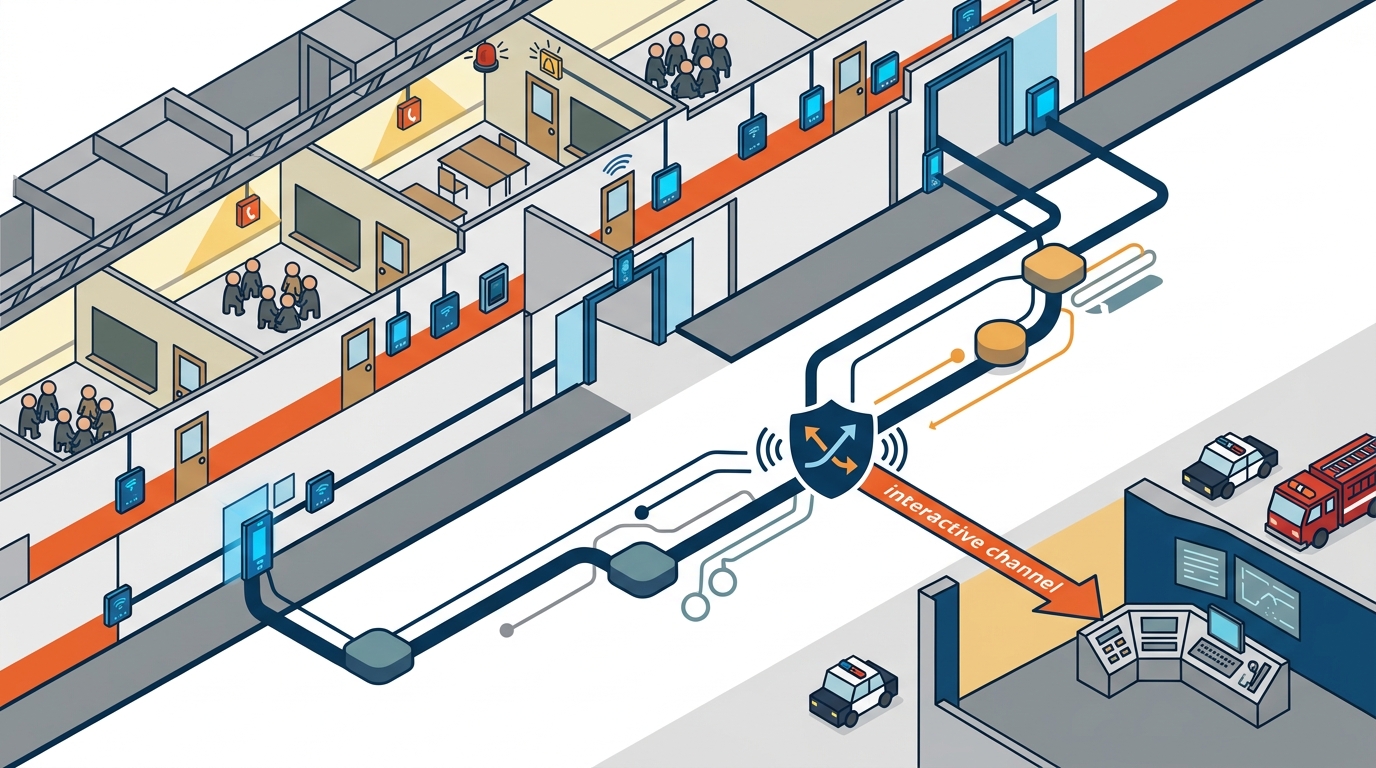
Traditional emergency protocols often rely on fragmented communication channels. Staff may call 911, while administrators use separate apps to notify parents, and security teams use radio systems. This fragmentation creates confusion and delays. A unified platform consolidates these interactions into a single interactive channel. When a Police Alert pull station is activated, the system simultaneously notifies the central monitoring station, local law enforcement, and designated on-site staff. This ensures that everyone is working from the same set of facts and location data.
Reducing Human Touchpoints
The most significant barrier to faster response is the number of human-centric tasks required to initiate a response. In a panic, cognitive load increases, and simple tasks like dialing a phone number or navigating a complex software interface become difficult. BluePoint Alert Solutions addresses this by minimizing human touchpoints. The system is designed to be intuitive, requiring no extensive training to activate. This design philosophy ensures that even in high-stress scenarios, the response is immediate and accurate.
The Role of Interactive Communication
Interactive communication is the defining feature of modern rapid response systems. It allows for two-way dialogue between the command group and building occupants during an incident. This is not merely about sending alerts; it is about gathering real-time situational awareness. Staff and students can report their status, location, and observations directly to the command center. This data helps first responders make informed decisions before they even arrive on the scene.
Situational Awareness Tools
The Command & Control platform provides tools that enhance situational awareness. This includes live mapping and floor plans that show the exact location of the activated device. It also includes the ability to view live security camera feeds. For first responders, this means they arrive with context, not just an alarm signal. They know where the threat is, who is in the building, and what the current status of the lockdown is.
Two-Way Text and Email
Building occupants provide real-time situational awareness to the Command Group through simple text or email responses. This allows the command group to filter information and provide faster, more informed instructions. For example, if a teacher reports that a hallway is clear, the command group can direct other staff to use that route for evacuation or sheltering. This interactive loop is critical for managing the dynamic nature of an active threat.
Life-Safety Standards and Reliability
Reliability is non-negotiable in emergency response systems. A system that fails during a power outage or network disruption is a liability, not an asset. BluePoint Alert Solutions approaches its technology with a true life-safety mindset. The technical requirements that make the fire alarm the most reliable system installed in buildings have been replicated in these emergency response solutions. This ensures that the system is compliant with FEMA’s recommendation for Incident Command Structure and Multi-Hazard Communications.
Redundant Communication Pathways
BluePoint systems use redundant communication pathways to ensure alerts are transmitted even if the primary network fails. This includes cellular failover and backup batteries. The central station monitoring is UL-listed and FM-approved, with multiple interconnected operating stations located throughout the United States. This geographic redundancy ensures that the system remains operational regardless of local infrastructure failures.
Security and Compliance
The Command & Control platform uses enterprise-level encryption and multi-factor authentication to protect sensitive data. Only authorized personnel can access system controls. This level of security is essential for protecting the privacy of students and staff while ensuring that the system cannot be compromised by unauthorized users. The devices are also designed with accessibility in mind, meeting ADA requirements where applicable.
Implementation and Training Workflow
Implementing a rapid response system is not just about installing hardware. It involves a comprehensive workflow that includes planning, installation, testing, and training. BluePoint partners with licensed integrators across the country to ensure that the system is installed correctly and integrated with existing security infrastructure. Typical installations for standard setups can be completed within 1 to 3 days, minimizing disruption to the school day.
Strategic Device Placement
Strategically located pull stations provide simple alert coverage throughout the facility. This includes areas such as parking lots, outdoor play areas, and all campus buildings. Wearable mobile devices can also be worn by staff and security personnel, allowing them to activate the system from anywhere in the building. This flexibility ensures that the system is accessible to those who are most likely to encounter a threat.
Training and Drills
While the system is designed to be intuitive, training is still essential. Regular drills help staff become familiar with the activation process and the subsequent response protocols. The system’s simplicity means that training is focused on the workflow rather than complex software navigation. This ensures that when an emergency occurs, staff can act instinctively and effectively.
Key Takeaways
- BluePoint Alert Solutions connects first responders and school staff on a single interactive channel during a lockdown.
- Interactive communication allows for real-time situational awareness and two-way dialogue between occupants and the command group.
- The system is built with a true life-safety approach, featuring redundant communication pathways and UL/FM-approved monitoring.
- Minimizing human touchpoints is critical for reducing response times in high-stress environments.
- Strategic placement of pull stations and wearable devices ensures comprehensive coverage across the campus.
- The Command & Control platform provides live mapping, camera feeds, and automated notifications to enhance decision-making.
- Regular testing and training are essential to ensure system reliability and staff preparedness.
Frequently Asked Questions
How does the BluePoint Alert system notify first responders?
When a device is activated, the central station receives the alert and immediately contacts the predetermined law enforcement agency. Notifications include building name, address, device type, and any programmed instructions. Alerts can also be sent to responders and administrators via SMS, email, and phone, even before dispatch has contacted responders.
What is the difference between Police Alert and Medical Alert devices?
Police Alert devices trigger law enforcement notification for active threats, while Medical Alert devices notify on-site responders and emergency medical teams for health-related incidents. Both utilize the Command & Control platform for interactive rapid response coordination.
Can BluePoint systems work if the building network goes down?
Yes. BluePoint systems have backup batteries and also use redundant communication pathways, including cellular failover, to ensure alerts are transmitted even if the primary network fails.
How quickly can a BluePoint system be installed in a school?
Installation timelines vary by building size and complexity. Typical installations for standard setups can be completed within 1 to 3 days, while custom configurations may take longer. BluePoint provides detailed installation planning to minimize disruption.
Are BluePoint devices ADA compliant?
Yes. Devices are designed with accessibility in mind, including proper mounting heights, tactile feedback, and visual indicators to meet ADA requirements where applicable.
How often should BluePoint systems be tested?
Regular testing is recommended at least quarterly to ensure device functionality, system reliability, and staff familiarity with the activation process.
Conclusion
Choosing the right emergency communication platform is a critical decision for any educational institution. The ability to connect first responders and school staff on a single interactive channel can mean the difference between a swift, effective response and a delayed, chaotic one. BluePoint Alert Solutions provides a robust, reliable, and intuitive solution that meets the highest standards of life-safety engineering. By leveraging interactive communication, redundant infrastructure, and strategic device placement, schools can significantly reduce response times and enhance the safety of their students and staff. To explore how BluePoint can transform your emergency response capabilities, to schedule a demo.