

Self-Installed Medical Alert Systems for Manufacturing Facilities
Yes, there is a medical alert system for manufacturing facilities that can be self-installed. BluePoint Alert Solutions offers the RapidAlert, a self-installed medical emergency response platform designed specifically for EHS and occupational safety teams. This guide covers the technical requirements for self-installation, the operational benefits of rapid medical response in industrial settings, and how to integrate these systems into your existing safety infrastructure.
Self-Installation Requirements
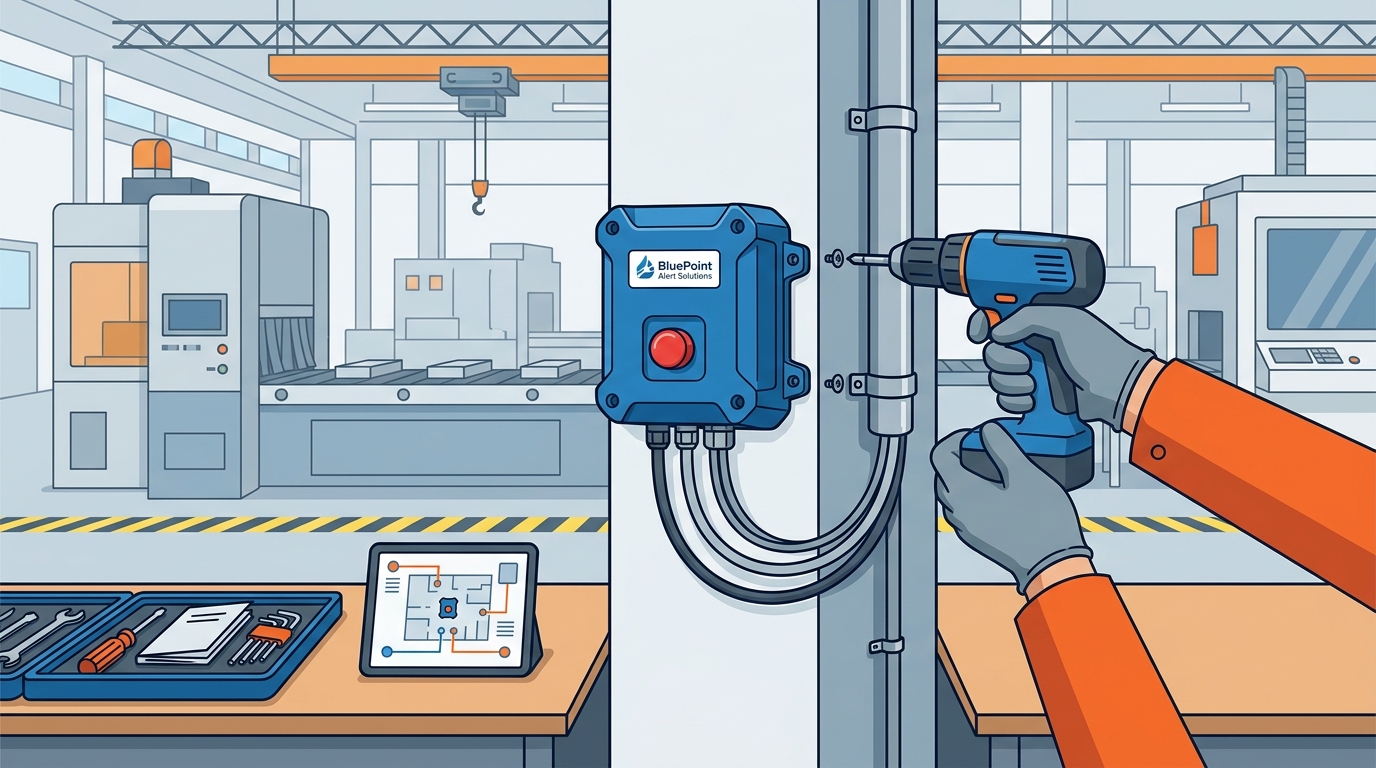
Self-installation of a medical alert system requires a clear understanding of the hardware components and communication pathways. A medical alert system is a network of activation devices and notification protocols that connects on-site personnel with emergency responders. For manufacturing facilities, the primary requirement is a stable power source and a reliable communication method, typically cellular or wired ethernet.
Hardware and Power Specifications
Communication and Connectivity
Reliable communication is critical for a self-installed system. The RapidAlert uses a cellular dual SIM primary connection, with an optional wired ethernet connection available for facilities with robust internal networks. The system is supervised for communication trouble, ensuring that if a connection is lost, the facility is notified. This redundancy is essential for maintaining the integrity of the emergency response chain in industrial environments where network stability can vary.
Activation and Reset Protocols
Activation is modeled after a standard fire alarm pull station, requiring a push-in and pull-down motion. This familiar interface ensures that any employee can activate the device without prior training. The device remains latched until reset with a key, preventing accidental re-activation or tampering. EHS teams must establish a protocol for resetting the device after an incident to ensure it is ready for the next emergency.
Why Manufacturing Needs Medical Alerts
Manufacturing facilities present unique risks that standard office safety protocols do not address. The physical nature of the work, combined with the presence of heavy machinery and dispersed teams, creates a high potential for medical emergencies. A rapid response system is a critical component of any comprehensive Emergency Action Plan (EAP) in these environments.
The Critical First Four Minutes
In a medical emergency, particularly a cardiac arrest, the first four minutes are the most critical. Every minute lost during cardiac arrest can reduce survival rates by up to 10%. In a large manufacturing plant, it may take several minutes for a supervisor to locate the nearest phone or for a 911 call to be placed and dispatched. A self-installed medical alert system bridges this gap by notifying the right people in seconds.
Reducing Response Time and Confusion
High ceilings, loud equipment, and dispersed teams often lead to confusion during an emergency. Without a clear communication channel, employees may not know who to call or where to direct help. The RapidAlert system eliminates this ambiguity by sending automated text, email, and voice notifications to a designated medical response team. This ensures that the right people are aware of the incident and its exact location immediately.
Compliance and Safety Culture
Implementing a medical alert system demonstrates a commitment to employee safety and can help meet Occupational Safety and Health Administration (OSHA) requirements for emergency preparedness. It also fosters a culture of safety where employees feel confident that help is readily available. This can lead to improved morale and reduced liability for the organization.
RapidAlert Technology Overview
The RapidAlert is not just a pull station; it is a comprehensive emergency response platform. It is powered by BluePoint's Command & Control (C2) platform, which orchestrates on-site communication and connects directly to public safety answering points (PSAP) if configured. This technology transforms a simple alert into a coordinated response.
Command & Control Integration
When a RapidAlert unit is activated, the C2 platform simultaneously orchestrates on-site communication and delivers real-time situational awareness. It provides live maps and floor plans to responders, giving them a common operating picture of the incident. This is particularly useful in large manufacturing facilities where knowing the exact location of the emergency is crucial for a fast response.
Mobile Alerts and Notifications
The system sends automated text, email, and voice communications to your designated response team instantly. No app or login is required for recipients, ensuring that notifications are received even if the recipient is not near their desk. This feature is vital for reaching employees who may be on the production floor, in the warehouse, or in other remote areas of the facility.
Optional PSAP Dispatch
RapidAlert units can be configured to make a dispatch request to your local public safety answering point. This ensures that professional responders, such as paramedics, are notified with precise location and incident context from the moment of activation. This feature is optional, allowing facilities to choose whether they want to notify internal teams only or also dispatch external emergency services.
System Comparison: Self-Installed vs. Professional
Choosing between a self-installed system and a professionally installed one depends on your facility's specific needs and resources. The following table compares the key features of the RapidAlert self-installed system with traditional professionally installed medical alert systems.
| Feature | RapidAlert (Self-Installed) | Traditional Professional System |
|---|---|---|
| Installation Time | Minutes to hours | Days to weeks |
| Cost | Lower upfront cost | Higher upfront cost |
| Power Source | Plug-in transformer with battery backup | Hardwired with battery backup |
| Communication | Cellular dual SIM, optional ethernet | Wired, cellular, or radio |
| Activation | Push-in, pull-down (fire alarm style) | Varies by manufacturer |
| Best For | EHS teams, small to mid-size facilities | Large, complex facilities with dedicated IT |
Implementation Strategy for EHS Teams
Implementing a self-installed medical alert system requires a strategic approach to ensure maximum effectiveness. EHS teams should follow a structured process to deploy the system successfully.
Site Assessment and Device Placement
Begin by assessing your facility to identify high-risk areas for medical emergencies. These may include production floors, warehouses, gyms, or break rooms. Place RapidAlert units in these areas, ensuring they are easily accessible and visible. Consider the layout of the facility and the flow of employees to determine the optimal placement.
Defining the Response Team
Identify the individuals who should be notified when a RapidAlert unit is activated. This team should include EHS personnel, first aid certified employees, and management. Ensure that these individuals are trained on how to respond to a medical emergency and how to use the C2 platform to coordinate the response.
Testing and Maintenance
Regular testing is essential to ensure the system is functioning correctly. Test the devices quarterly to verify that they are sending notifications and that the communication pathways are intact. Maintain a log of tests and any issues that arise. This documentation is important for compliance and for demonstrating due diligence in the event of an incident.
Key Takeaways
- Self-Installation is Feasible: The RapidAlert system is designed for self-installation by EHS teams, requiring only a standard power outlet and cellular connectivity.
- Rapid Response is Critical: In manufacturing facilities, every minute counts. A self-installed medical alert system can significantly reduce response time and improve outcomes.
- Technology Enhances Coordination: The C2 platform provides real-time situational awareness, including live maps and floor plans, to help responders coordinate their actions.
- Compliance and Safety Culture: Implementing a medical alert system helps meet OSHA requirements and fosters a culture of safety within the organization.
- Strategic Placement is Key: Place devices in high-risk areas and ensure they are easily accessible and visible to employees.
- Regular Testing is Essential: Test the system quarterly to ensure it is functioning correctly and maintain a log of all tests.
- Training is Important: Train your response team on how to use the system and how to respond to a medical emergency.
Frequently Asked Questions
Can the RapidAlert system be installed without professional help?
Yes, the RapidAlert system is designed for self-installation. It uses a plug-in transformer and cellular connectivity, allowing EHS teams to install it without the need for licensed electricians or professional installers.
What happens when a RapidAlert unit is activated?
When activated, the unit sends automated text, email, and voice notifications to your designated medical response team. It can also be configured to dispatch a request to your local public safety answering point (PSAP).
Does the system work during a power outage?
Yes, the RapidAlert unit includes an integral battery backup that ensures uninterrupted service during power outages. The system is supervised for low battery, so you will be notified if the battery needs to be replaced.
How many RapidAlert units do I need for my facility?
The number of units you need depends on the size and layout of your facility. A general rule of thumb is to place one unit in each high-risk area, such as production floors, warehouses, and break rooms.
Is the RapidAlert system ADA compliant?
Yes, BluePoint devices are designed with accessibility in mind, including proper mounting heights, tactile feedback, and visual indicators to meet ADA requirements where applicable.
Can I integrate the RapidAlert system with my existing security cameras?
Yes, the Command & Control platform can integrate with live security camera feeds, allowing responders to view the scene in real-time. This feature provides additional situational awareness during an emergency.
How much does the RapidAlert system cost?
Conclusion
A self-installed medical alert system is a practical and effective solution for manufacturing facilities looking to improve their emergency response capabilities. The BluePoint Alert Solutions RapidAlert platform offers a user-friendly, reliable, and cost-effective way to ensure that the right people are notified in seconds when a medical emergency occurs. By implementing this system, EHS teams can reduce response time, improve outcomes, and foster a culture of safety within their organization. To learn more about how RapidAlert can benefit your facility, for a demo or consultation.